UK and Ireland Online Gambling Trends: A Tale of Participation Rates, Preferences, and Looming Regulations
David Frank · Apr 20, 2026

UK and Ireland Online Gambling Trends: A Tale of Participation Rates, Preferences, and Looming Regulations
Recent Shifts in Online Gambling Participation
Observers note how online gambling has woven itself into everyday habits across the UK and Ireland, with fresh data painting a clear picture of who's playing, what they're betting on, and why differences persist between the two nations. In the UK, figures reveal that 38% of adults dipped into online gambling over the previous four weeks, a number that drops to 17% when excluding those who only bought lottery tickets; sports betting and horse racing lead the pack right after lotteries, while remote casinos add breadth to the market. Ireland, on the other hand, shows a higher overall gambling involvement at around 75% monthly, where over a third happens online and centers heavily on sports betting, all as the country gears up for tighter controls.
What's interesting is how these patterns emerge from surveys capturing behaviors in real time, like those tracking April to July 2025 online participation rates through detailed figures that researchers use to benchmark trends. And while the UK market feels more diversified, Ireland's focus stays sharp on sports, reflecting cultural ties to events like football and Gaelic games.
Breaking Down UK Trends: Breadth and Popularity
Experts tracking the UK scene point out that lotteries dominate as the gateway activity, yet when peeled away, sports and horse racing betting surge ahead, drawing in crowds who wager on Premier League matches or Cheltenham Festival races; remote casinos, with their slots and table games, round out a robust ecosystem that's accessible via apps and sites regulated by the Gambling Commission. Data indicates this 38% participation rate holds steady among adults, encompassing everything from casual punts to session-based play, and it underscores how tech has made betting as routine as checking scores.
Take one survey respondent profile that researchers highlight: a typical UK bettor in their 30s places weekly football accumulators alongside occasional casino spins, blending thrill with familiarity; such behaviors fuel the non-lottery 17% core, where preferences skew toward live in-play options that keep engagement high during matches. But here's the thing, the market's variety means preferences spread out, unlike narrower focuses elsewhere, and as of early 2026, whispers of tax tweaks haven't dimmed enthusiasm yet.
Those who've studied quarterly data notice participation ticking up slightly in spring, mirroring events like the Grand National, yet the four-week snapshot captures a normalized view; sports betting's edge comes from its immediacy, with odds shifting live and pulling in both novices and veterans who chase value bets.
Ireland's Landscape: Higher Volume, Sports-Centric Focus
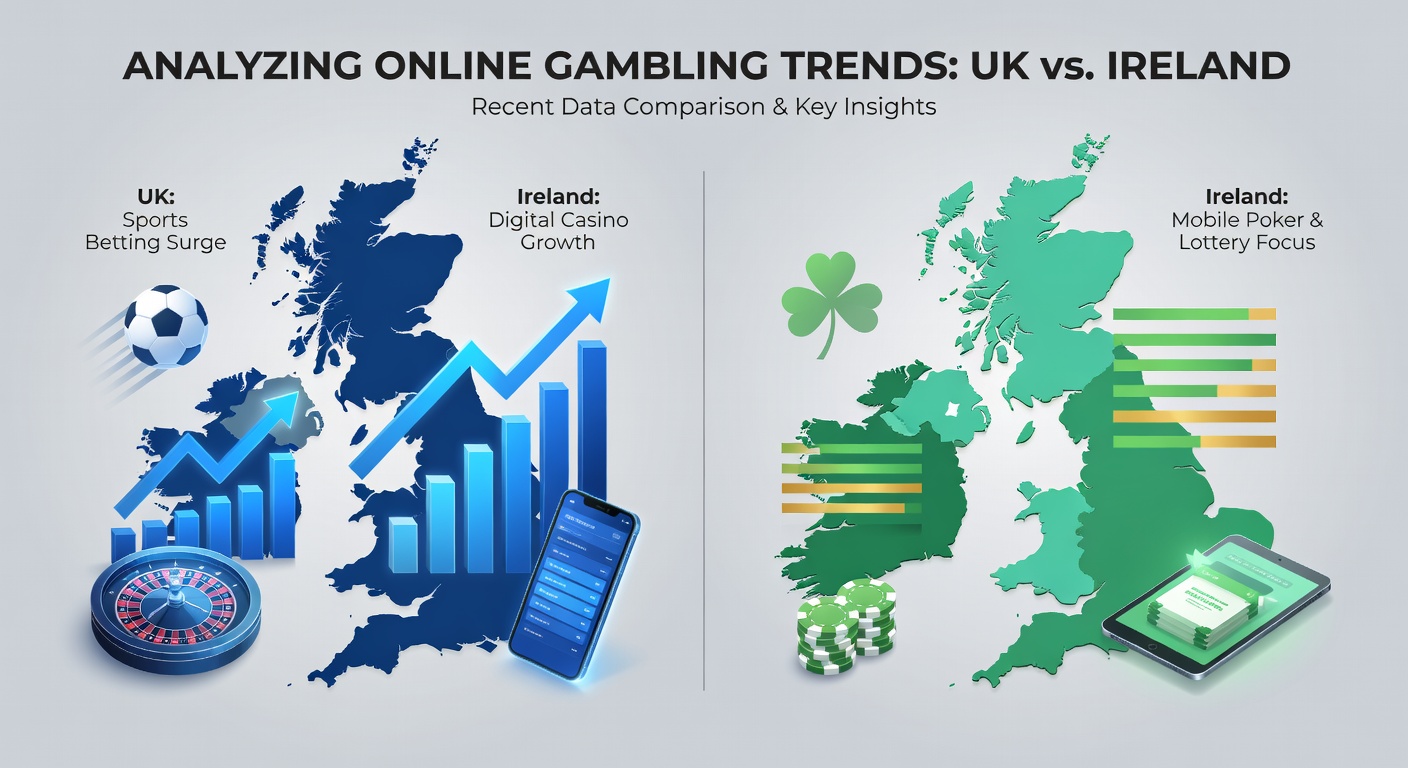
Now shift to Ireland, where gambling pulses stronger at 75% monthly participation overall, and over a third migrates online, predominantly through sports betting platforms buzzing with wagers on hurling, rugby, and soccer; this intensity stems from a culture where pub chats often turn to odds, and mobile apps make it seamless to bet from anywhere. Researchers found that while UK players spread bets across categories, Irish participants zero in on sports, creating a concentrated market that's both vibrant and ripe for oversight.
It's noteworthy that this high rate includes traditional forms too, but the online slice—over 33% of the total—signals digital acceleration, driven by operators offering competitive lines on local leagues like the All-Ireland Championships; one case study from recent polls shows groups of friends pooling bets on weekend fixtures, a social ritual that's as Irish as the games themselves. And with the Gambling Regulatory Authority set to launch in March 2025, preparations ramp up, promising standardized rules that could reshape access by April 2026.
Figures for that pivotal period reveal steady online upticks, particularly in sports where live streaming pairs with betting to boost sessions; unlike the UK's casino diversification, Ireland's preferences stay laser-focused, although slots gain ground slowly among younger demographics testing the waters.
Head-to-Head Comparison: Rates, Preferences, and Market Drivers
Side by side, the UK and Ireland reveal stark contrasts in how online gambling unfolds: the UK's 38% four-week rate (17% sans lotteries) lags Ireland's 75% monthly total with its hefty online component, yet UK players enjoy a wider menu including thriving remote casinos, whereas Ireland channels energy into sports betting almost exclusively. Data shows UK sports and horse racing trail only lotteries in popularity, but they command a plurality of non-lottery action, while Ireland's sports dominance leaves less room for other verticals; this divergence ties to regulatory histories, market maturity, and event calendars that fire up bettors differently.
Turns out, participation metrics highlight cultural nuances too: UK bettors often mix formats for variety, hopping from football to roulette, but Irish ones stick to predictable sports outcomes that align with national passions; experts observe how the UK's broader market fosters innovation like virtual sports, even as Ireland's focus amplifies per-capita spend on matches. And in the regulatory arena, Ireland's upcoming authority—slated for full effect by 2026—mirrors UK efforts but starts from a higher baseline of involvement, potentially curbing excesses while preserving the buzz.
- UK: 38% online participation (17% core), sports/horse racing lead post-lotteries, casino variety.
- Ireland: 75% overall monthly (1/3+ online), sports betting reigns supreme.
- Shared thread: Mobile tech drives both, but preferences diverge sharply.
People who've crunched the numbers emphasize how these trends interplay with demographics; younger UK adults lean casino-ward for entertainment, while Irish youth mirror elders in sports loyalty, creating generational continuity that's harder to shift.
Regulatory Horizons: Ireland's 2025 Pivot and Beyond
As Ireland readies its Gambling Regulatory Authority for a March 2025 debut, the move promises structured oversight akin to the UK's Gambling Commission, targeting advertising curbs, age verification, and stake limits that could temper the 75% participation by influencing online sports betting's growth. Observers predict that by April 2026, initial impacts surface in quarterly data, potentially aligning Ireland closer to UK moderation while respecting its higher baseline; the UK's established framework already balances a diverse market, enforcing safer gambling tools like deposit caps that participants increasingly use.
What's significant is how both nations grapple with similar challenges—problem gambling signals, ad saturation—yet Ireland's fresh authority injects urgency, with consultations wrapping up to fine-tune rules before full rollout. Researchers note early compliance efforts from operators, who adapt platforms proactively, ensuring sports betting remains central but safer; in the UK, ongoing tweaks like affordability checks evolve alongside, keeping the 38% rate stable amid diversification.
One expert analysis points to cross-border learnings, where UK data informs Ireland's blueprint, fostering harmonized standards that protect players without stifling markets; and as digital wallets proliferate, both see seamless transactions boosting participation subtly.
Conclusion
The online gambling story between the UK and Ireland boils down to nuanced differences in scale and style: UK's 38% (17% core) embraces variety beyond sports and lotteries into casinos, while Ireland's 75% monthly heft, with over a third online and sports-led, braces for regulatory tightening via its 2025 authority. Data underscores these paths—participation snapshots, preference peaks, and prep for changes that shape tomorrow's landscape, especially as April 2026 nears with potential shifts in store. Those monitoring closely see a shared trajectory toward responsibility amid growth, where facts guide the evolution rather than hype.