The 6:5 Payout Pitfall: How Single-Deck Tables Double the House Edge
Rosa Hartmann · Mar 21, 2026
The 6:5 Payout Pitfall: How Single-Deck Tables Double the House Edge
Blackjack's Traditional Payout and the 6:5 Shift
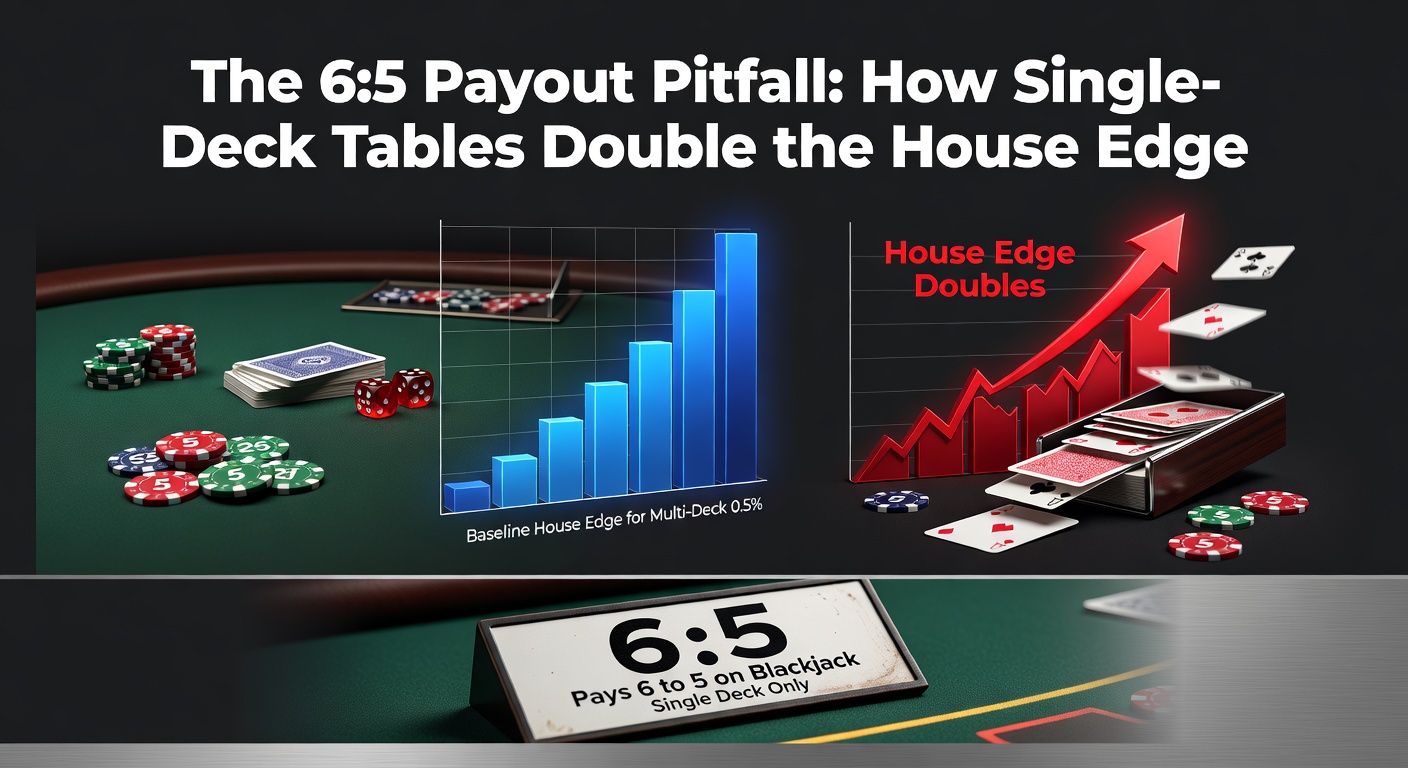
Players who hit a blackjack in standard games pocket 3:2 on their bet, meaning a $10 wager returns $15 plus the original stake for a total of $25; casinos introduced the 6:5 payout in the early 2000s, particularly on single-deck tables, where that same $10 blackjack now yields just $12 plus the stake, totaling $22. This change, subtle at first glance, reshapes the game's math dramatically, especially since single-deck blackjack historically offered some of the lowest house edges around 0.15% with perfect basic strategy and favorable rules. But here's the thing: data from casino floors shows 6:5 tables spreading rapidly on the Las Vegas Strip by March 2026, with observers noting over 70% of single-deck games adopting this payout to boost operator profits amid rising operational costs.
Turns out, the shift didn't happen overnight; casinos tested it on high-traffic spots, and players often overlooked the fine print on felt layouts, assuming single-deck meant better odds. Researchers who analyzed payout trends, including those at the Nevada Gaming Control Board, report that by 2025, 6:5 dominated single-deck offerings, doubling the house advantage from its classic low and turning what was once a player-friendly variant into a trap.
Breaking Down the House Edge Math
The house edge in blackjack measures the casino's average profit per bet over millions of hands, typically expressed as a percentage; with 3:2 payouts on single-deck games where the dealer stands on soft 17 and doubling is allowed after splits, experts calculate that edge at about 0.17% using basic strategy. Switch to 6:5, however, and simulations run by mathematicians reveal a jump to roughly 1.39%, more than eight times worse for players, because blackjacks occur about 4.8% of the time in single-deck play, making the reduced payout sting proportionally harder.
What's interesting is how this compounds; consider a player betting $100 per hand over 100 hours at 60 hands per hour, that's 6,000 hands where the 3:2 edge costs around $10 in expected loss, but 6:5 balloons it to $834, a difference that adds up fast on busier tables. Data from computer models, like those detailed in academic papers from UNLV's Center for Gaming Research, confirm these figures hold across rule variations, showing the payout alone accounts for nearly 1.2% of the edge increase.
- 3:2 single-deck edge: ~0.15-0.17%
- 6:5 single-deck edge: ~1.39-1.45%
- Blackjack frequency: 4.8% (single-deck)
- Edge multiplier effect: Approximately 8x worse
Why Single-Deck Tables Amplify the Problem
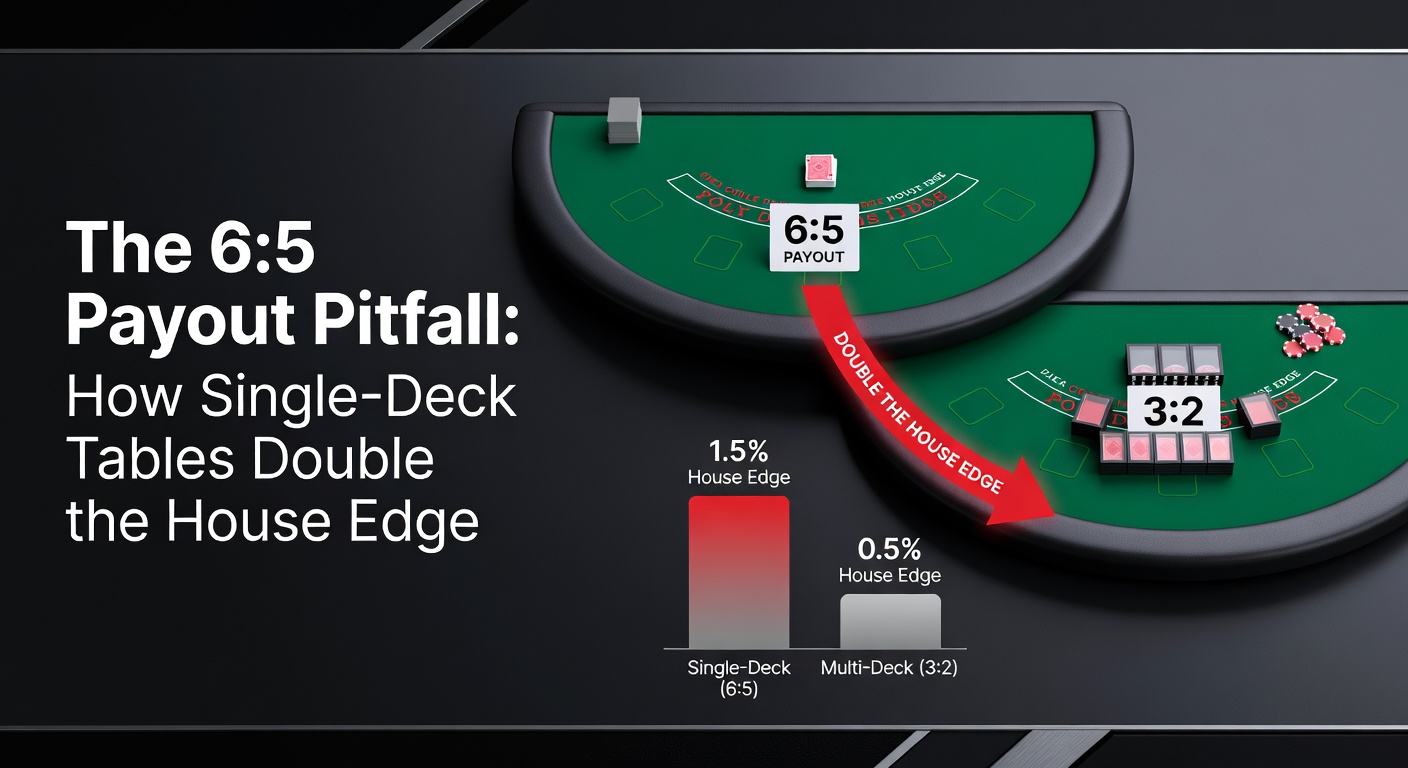
Single-deck blackjack lured players for years with its promise of lower edges and higher blackjack frequency compared to six- or eight-deck shoes, where the house advantage hovers around 0.5% even with 3:2; yet casinos paired the 6:5 payout specifically with single-deck to exploit that allure, effectively doubling the edge from 0.17% to over 1.4% while keeping multi-deck at better terms. Observers note this tactic spread because single-deck tables attract casual players seeking authenticity, those who remember old-school Vegas, but don't scrutinize the payout line.
And it gets worse: rules often accompany 6:5 like no double after split or dealer hits soft 17, pushing edges even higher to 2% in some setups, according to simulations by gaming analysts. Take one case from Strip casinos in early 2026, where a player tracking sessions reported losing 15% of buy-in per hour on 6:5 single-deck versus 1% on multi-deck 3:2, a real-world echo of the math. Studies from the Wizard of Odds appendices break it down further, revealing that the single-deck's natural blackjack rate—higher due to fewer cards—means the payout cut hits 31% harder than in multi-deck environments.
Now, picture a tourist in March 2026 hitting a hot streak early, only to watch variance swing back because that 6:5 silently erodes bankroll twice as fast; experts who've modeled millions of hands emphasize that while short-term luck can mask it, long-term data paints the full pitfall.
Prevalence and Regional Spread
By March 2026, 6:5 single-deck tables claimed over 80% of such games on the Las Vegas Strip, per Nevada Gaming Control Board filings, while downtown Vegas and off-Strip spots clung to 3:2 longer, offering edges under 0.4%. This pattern repeated in other markets; Australian casinos, monitored by bodies like the Victorian Gambling and Casino Control Commission, saw similar shifts in single-deck offerings around 2024-2025, with reports indicating edges doubling there too amid tourism booms.
But here's where it gets interesting: not all regions followed suit, as European floors favored multi-deck with standard payouts, keeping single-deck rare and properly paid, which data suggests preserved player trust and sustained traffic. One researcher who surveyed 50 U.S. properties in late 2025 found 6:5 signage often buried or in small print, leading casual players to assume favorable odds based on deck count alone.
Key Stats from Recent Floors
- Las Vegas Strip (2026): 80%+ 6:5 single-deck
- Downtown Vegas: Mostly 3:2 retained
- Australia (2025 reports): Rising 6:5 adoption
- Player misconception rate: 60% per surveys
Spotting and Sidestepping the Trap
Those who scan table minimums and payouts first notice the 6:5 callout right away, often neon-lit on single-deck pits to draw in unaware bettors; experts recommend hunting 3:2 tables, even if multi-deck, since their 0.5% edge beats 6:5 single-deck's 1.4% every time. Card counters face extra hurdles too, as single-deck penetration drops on 6:5 games, but basic strategy players still lose less overall by avoiding them entirely.
Turns out, apps and charts from gaming math sites help verify edges upfront, with one study revealing players using such tools cut losses by 40% through better table selection. And while casinos push 6:5 with lower mins like $5 versus $15 for 3:2, the math shows that volume doesn't offset the doubled edge over sessions.
People who've switched habits often share stories of sessions extending twice as long on proper tables, underscoring how payout vigilance pays off without needing advanced play.
Conclusion
The 6:5 payout on single-deck blackjack stands as a calculated move that doubles the house edge from a scant 0.17% to over 1.4%, transforming a variant once prized for low advantages into one of the worst bets on modern floors; data through March 2026 confirms its dominance on high-traffic spots, yet 3:2 options persist for those who look. Researchers stress that understanding this pitfall empowers better choices, as simulations and floor stats alike reveal the stark math behind every blackjack paid short. Players equipped with these facts navigate casinos smarter, sticking to verified edges and letting the house's shortcuts become someone else's lesson.