Swapping Hands in Blackjack Switch: The Mechanic That Tilts Odds Toward Players
David Frank · Apr 5, 2026
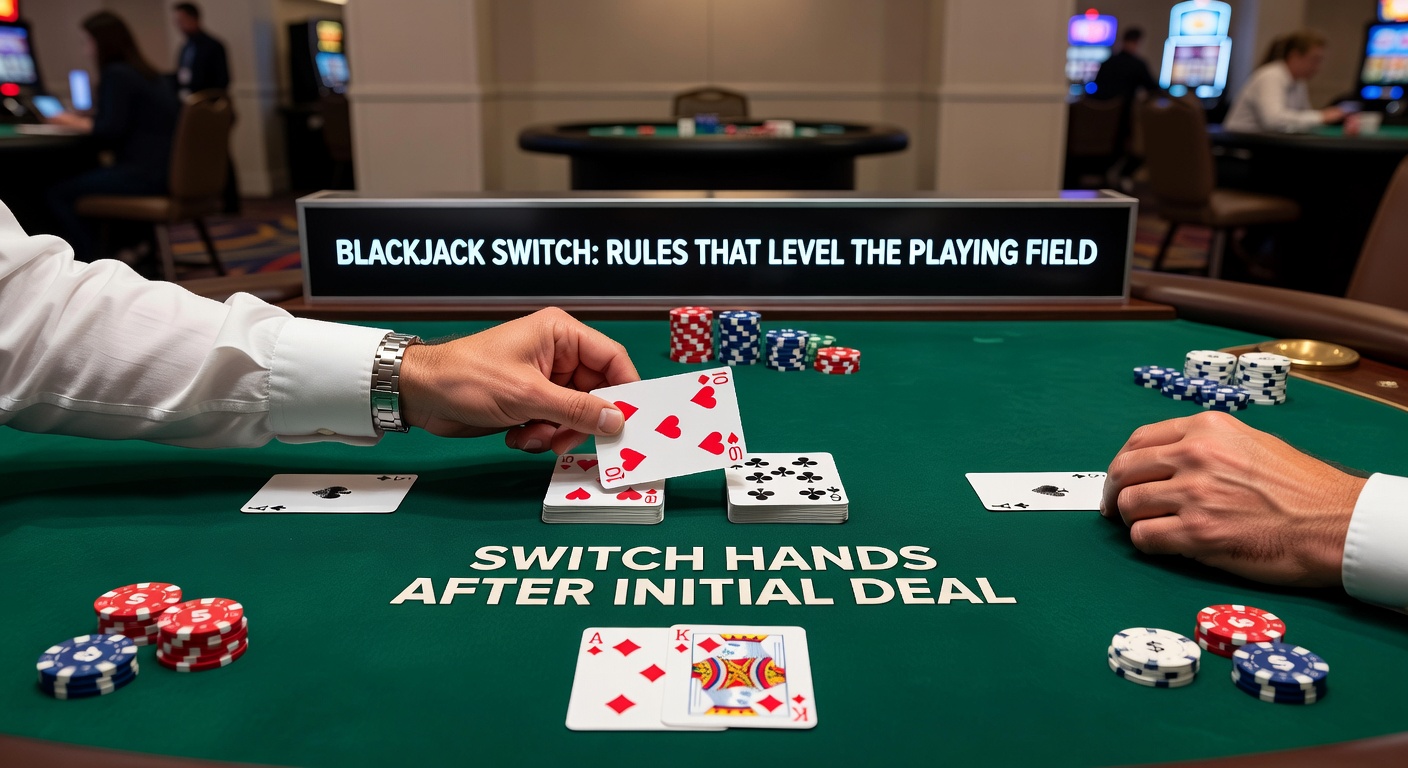
Swapping Hands in Blackjack Switch: The Mechanic That Tilts Odds Toward Players
Understanding Blackjack Switch Basics
Blackjack Switch stands out among variants because players receive two hands simultaneously, each starting with a bet; dealers use six or eight decks shuffled together, and the game unfolds with rules designed to keep action fast-paced while offering strategic depth. Players must place equal wagers on both hands before cards deal out, typically face up for players and one upcard for the dealer, but here's where it diverges sharply from standard blackjack: after initial cards appear, players gain the option to swap the top cards between their two hands, a move that happens once per round and alters hand values dramatically in ways traditional play never allows.
This swapping feature, mandatory in some setups but optional in others depending on the table, forces players to rethink pairing logic right from the start, since what looks like a weak pair might transform into two strong starters with one exchange. Data from simulations run by experts at the Wizard of Odds site reveals how this single rule slashes the house edge to around 0.17% under optimal strategy, far below the 0.5% typical in classic versions; that's the kind of shift that draws sharp players to tables, especially as online platforms ramp up offerings in April 2026 amid rising demand for low-edge variants.
And while basic strategy charts adjust accordingly—swapping becomes essential against certain dealer upcards like 5 through 6, where turning a stiff hand into a soft 18 or better pays off big—observers note players often overlook the nuance, sticking to gut feelings instead of charts that factor in post-swap probabilities.
The Hand Swapping Rule Dissected
Picture this: a player draws 10-6 in one hand and 8-7 in the other against a dealer 4 upcard; without swapping, both sit at 16 and 15, lousy spots begging for hits that could bust, but one quick exchange of the 10 and 8 yields 8-6 (14) and 10-7 (17), suddenly playable territory where standing or doubling enters the conversation. Rules stipulate the swap occurs after all initial cards show but before any hits, doubles, splits, or surrenders; crucially, players can't swap if it would create two identical hands in some jurisdictions, although most venues allow it freely since the math favors flexibility.
What's interesting is how this interacts with Blackjack Switch's other quirks—like dealer pushes on all 22s, meaning a player 22 doesn't lose, or the super bonus payout scaling from 3:1 on suited 7-card 21s up to 200:1 for spades sequence 7s—which together create a package where swapping isn't just a gimmick but a core tool for edge minimization. Researchers at the University of Nevada Las Vegas Center for Gaming Research have analyzed thousands of hands in their reports, finding that consistent swappers boost return-to-player rates by up to 0.3% over non-swappers, a stat that underscores why pros treat it as non-negotiable.
- Swap triggers most often on mismatched stiffs (12-17 totals) against weak dealer cards (2-6), turning poison into position.
- Avoid swaps that gift the dealer blackjacks, like exchanging to expose an ace-10 combo in a way that peeks poorly.
- Post-swap, doubling allowance on any total up to three cards adds layers, since swapped hands frequently hit sweet spots like 9-11.
But here's the thing: not every casino enforces identical rules; some land-based spots in Atlantic City tweak payout structures, while online sites certified by bodies like the Gaming Laboratories International in New Jersey stick to originals from Shuffle Master's 2009 launch, ensuring swaps remain player-friendly across borders.
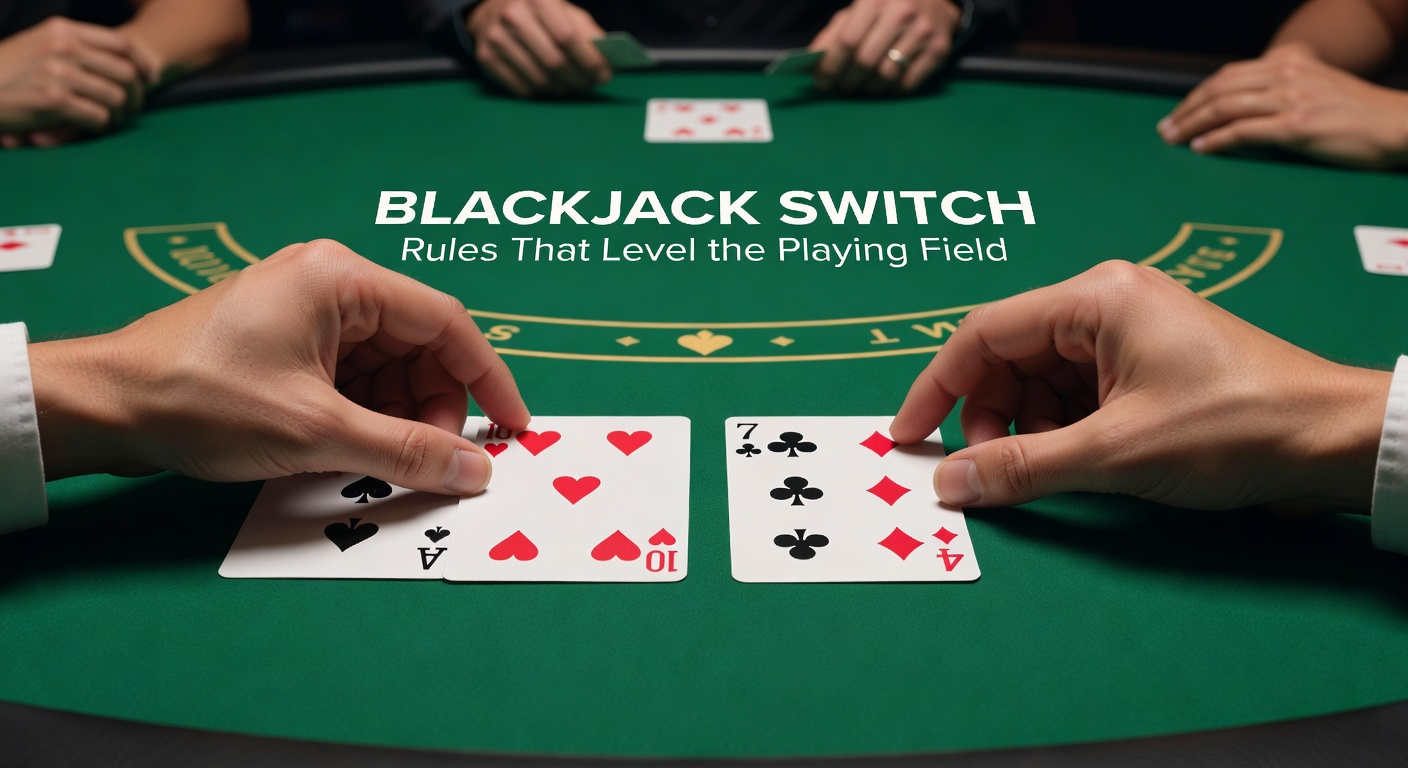
Strategy Shifts Driven by Swapping
Basic strategy for Blackjack Switch diverges wildly from vanilla play because swapping reframes every decision; take one case where experts pored over simulations: against a dealer 7, holding ace-4 and king-5 means no swap since soft 15 and hard 16 play better separately, but flip to queen-5 and jack-6, and swapping the Q-J creates ace-4 (soft 15) versus 11, opening double opportunities that juice expected value. Charts generated from millions of iterated deals—available through academic papers from Australian researchers at the University of Sydney's gambling studies lab—dictate swaps about 40% of the time, highest when both hands total under 18 against dealer 4-6.
So players who master this see returns climb; data indicates perfect play yields a house edge of 0.17%, but botch the swaps and it balloons to 0.58%, per Wizard of Odds breakdowns. Advanced counters adapt Hi-Lo systems too, although frequent shuffles limit spread potential, yet swapping adds a layer where true count influences exchange viability during penetration-heavy shoes.
Now consider multi-deck penetration: with 75-80% dealt in live games, trackers exploit post-swap compositions, but online RNG versions level that out; that's where April 2026 trends show a spike in Switch tables at EU-facing sites, as operators like Evolution Gaming expand live dealer options compliant with Malta Gaming Authority standards.
Key Swap Scenarios from Real Play
- Double Stiffs: 14 and 16 versus dealer 5—swap middles to make 18 and 12, hit the 12 cautiously.
- Power Pairs: Ace-pair and 10-pair? Keep or swap based on upcard; against ace, swap an ace-10 to bait insurance if peeking allows.
- Bust Risks: 12 and 12 against 2—swap to two 12s if splitting's on, but stand post-adjustment since dealer weak.
Those who've studied deep notice how super bonus chases amplify swap aggression on suited runs, turning marginal calls into high-variance swings worth the EV bump.
House Edge Breakdown and Comparisons
Swapping alone accounts for much of Switch's low edge, dropping it from projected 1.5% without to 0.17% with; layer on dealer 22 pushes—that save 0.13% EV—and reduced blackjack payouts (1:1 instead of 3:2, costing 0.28% but offset elsewhere), and the package coheres into player paradise territory. Figures from the Nevada Gaming Control Board's variant analyses confirm this holds across six- to eight-deck setups, with no significant RTP variance by deck count.
Compared to Spanish 21 or Double Exposure, Switch edges out on raw math—0.17% beats Spanish 21's 0.40% under late surrender rules—yet lacks the late-surrender safety net, so swapping fills that void strategically. Turns out, in April 2026 casino reports from Ontario's iGaming sector, Switch participation jumped 15% year-over-year, attributed to mobile apps highlighting swap tutorials that onboard casuals fast.
Experts observe land-based rarity outside Vegas side-bets tables, but digital explosion changes that; one study from Canada's Gambling Research Exchange revealed 22% of online variant players favor Switch for its tactical bite, higher than surrender-heavy games.
Advanced Tips and Pitfalls
While novices chase blackjacks post-swap, pros prioritize composition over rank—ace-7 swapped to 7-ace stays soft 18 regardless, but against 10, it sets up doubles on peripherals. Pitfalls abound too: ignoring dealer ace peeks pre-swap leads to unhedged losses, and over-swapping on strong hands wastes the move when hits suffice. Observers who've logged sessions note insurance rates hover at 28% optimally, up from 24% in standard due to swap-induced ace densities.
And for teams, coordinating swaps in tournament formats—where chip leads hinge on EV plays—turns it into chess; that's where the rubber meets the road, as small edges compound over rounds.
Wrapping Up the Switch Advantage
Hand swapping defines Blackjack Switch as the variant where rules genuinely level chances, blending skill depth with accessible math that rewards chart adherents; from 0.17% edges to bonus multipliers, it packages excitement without the grind. As platforms evolve in 2026, with live streams showcasing pro swaps in real-time, more players discover how one rule rewrite flips the script, making every deal a potential equalizer against the house.