Practice Platforms to Casino Floors: Executing Blackjack Strategies in Varied Settings
Bianca Frank · Jun 22, 2026

Practice Platforms to Casino Floors: Executing Blackjack Strategies in Varied Settings
Players often begin their blackjack journey through digital simulators and training applications that replicate core rules and decision points, yet moving those skills into physical casino environments introduces variables that alter execution patterns. Research from institutions like the University of Nevada Las Vegas International Gaming Institute shows how simulation software allows repeated exposure to basic strategy charts and counting systems without financial pressure, while live tables add layers of human interaction and environmental noise that shift focus and timing.
Core Components of Virtual Training Environments
Digital platforms present standardized decks, customizable rule sets, and instant feedback on deviations from optimal play, which helps users internalize probabilities across thousands of hands in compressed timeframes. Observers note that these tools frequently incorporate adjustable speeds and scenario generators that mirror single-deck or multi-deck formats, giving practitioners the chance to drill responses against every dealer upcard combination. Data from academic studies on gambling behavior indicates users who log consistent simulator hours demonstrate measurable improvements in decision accuracy before any real-money exposure occurs.
Many applications now integrate progress tracking that logs error rates on specific situations such as pair splits or soft hand plays, allowing targeted repetition until patterns stabilize. This structured repetition builds muscle memory for chart-based decisions, and researchers have documented how such repetition reduces hesitation during actual sessions where clock pressure exists.
Environmental and Procedural Differences That Emerge Live
Casino floors introduce continuous elements absent from most simulators, including variable shuffle frequencies, physical card handling, and dealer pacing that rarely matches the uniform rhythm of software. Those who have studied live play patterns find that players must adjust to interruptions from drink service, nearby conversations, and the tactile requirements of stacking and pushing chips, none of which appear in virtual replicas.
Rule variations across venues further complicate direct transfer, since simulators default to common settings while real tables may enforce continuous shuffle machines or specific surrender policies that alter expected value calculations. Figures from regional gaming authorities outside the UK reveal that players who test multiple rule configurations in advance encounter fewer surprises when seated at unfamiliar tables.
Psychological and Financial Pressures in Transition
Free-play environments eliminate monetary consequences, which removes emotional responses tied to actual bankroll movement. Studies conducted through Canadian research centers have tracked how real stakes activate loss aversion mechanisms that can prompt deviations from practiced strategies, even among individuals who perform flawlessly in simulation. Gradual exposure through low-limit tables serves as an intermediate step that reintroduces financial feedback while keeping risk contained.
Distraction tolerance also differs, since simulators allow users to pause or restart hands at will, whereas live games proceed regardless of momentary lapses in attention. People who practice under added audio layers or time constraints within their training routines report smoother adaptation when those same distractions appear on the casino floor.
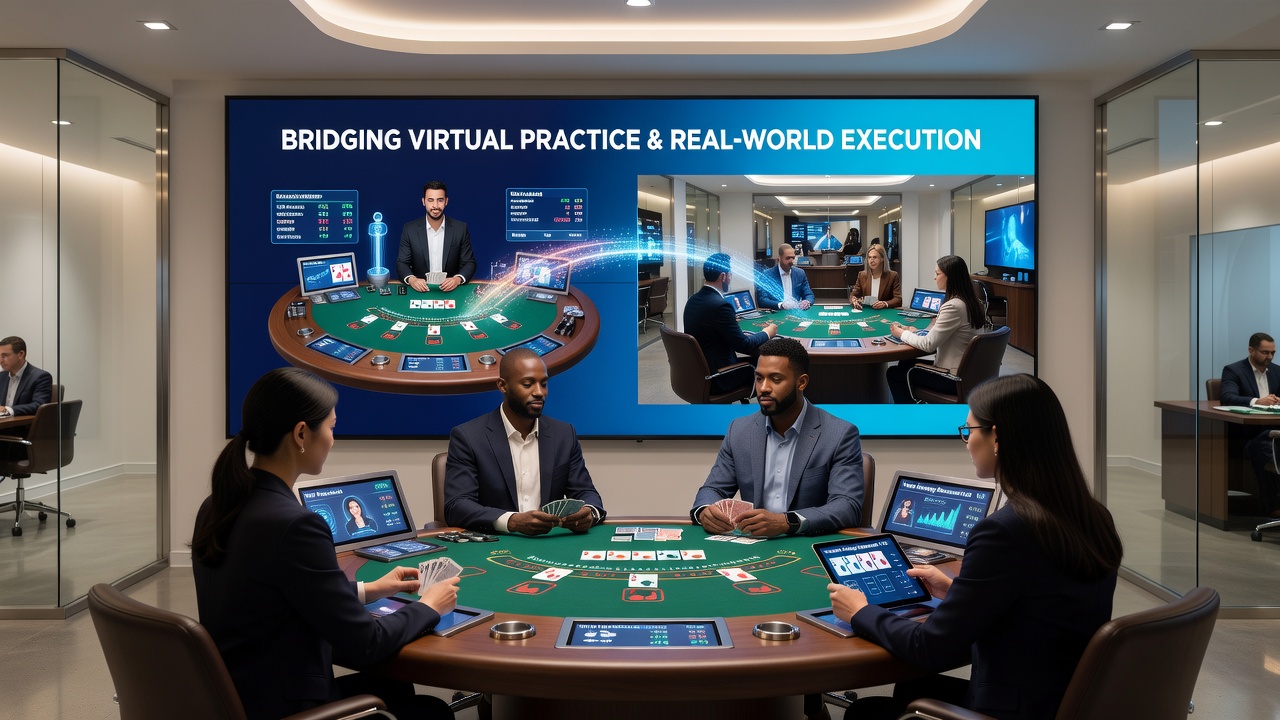
Methods for Aligning Simulated Skills with Live Conditions
Effective bridging often involves deliberate practice that replicates casino constraints within digital tools, such as disabling pause functions and introducing background soundtracks that simulate table chatter. Observers have recorded cases where practitioners scheduled sessions at actual low-stakes venues immediately after focused simulator blocks, creating feedback loops that highlight remaining gaps between virtual accuracy and on-site performance.
Some training programs now include modules that factor in tip etiquette, seating position effects, and bet spread adjustments under varying penetration levels, moving beyond pure mathematical drills. According to reports issued by the American Gaming Association, venues that offer introductory tables with educational dealers provide structured environments where transitioning players can test execution without full exposure to high-volume action.
Rule standardization efforts gaining traction ahead of June 2026 aim to harmonize certain online practice parameters with physical venue standards across multiple jurisdictions, which may reduce some discrepancies currently faced during skill transfer. Players who monitor these developments gain advance notice of emerging table formats that simulators will eventually incorporate.
Monitoring Progress and Adjusting Approaches
Tracking metrics such as hands per hour in both settings reveals pacing differences that affect endurance and decision quality over extended sessions. Data from industry reports shows that players who log comparative statistics between simulator output and live results identify specific situations where environmental factors most strongly influence outcomes, enabling targeted refinement.
Continuous review of session logs, whether digital or handwritten, supports ongoing calibration as rule sets and personal bankroll management evolve. Those who've examined long-term player records note that consistent cross-environment comparison correlates with steadier adherence to core strategies when moving between practice and live play.
Conclusion
Virtual practice supplies volume and repetition that accelerate familiarity with blackjack fundamentals, while real-world execution demands adaptation to physical, social, and financial variables that simulators only approximate. Combining structured digital drills with progressive live exposure creates pathways that narrow the gap between controlled environments and casino dynamics, supported by ongoing research and regional regulatory shifts expected through 2026. Players who systematically compare performance across both domains maintain clearer records of where additional adjustment yields measurable improvements in consistency.