Penetration's Power Play: How Deep Dealers Cut into the Deck Affects Blackjack Odds
David Schmid · Apr 6, 2026
Penetration's Power Play: How Deep Dealers Cut into the Deck Affects Blackjack Odds
Defining Deck Penetration in the Blackjack World
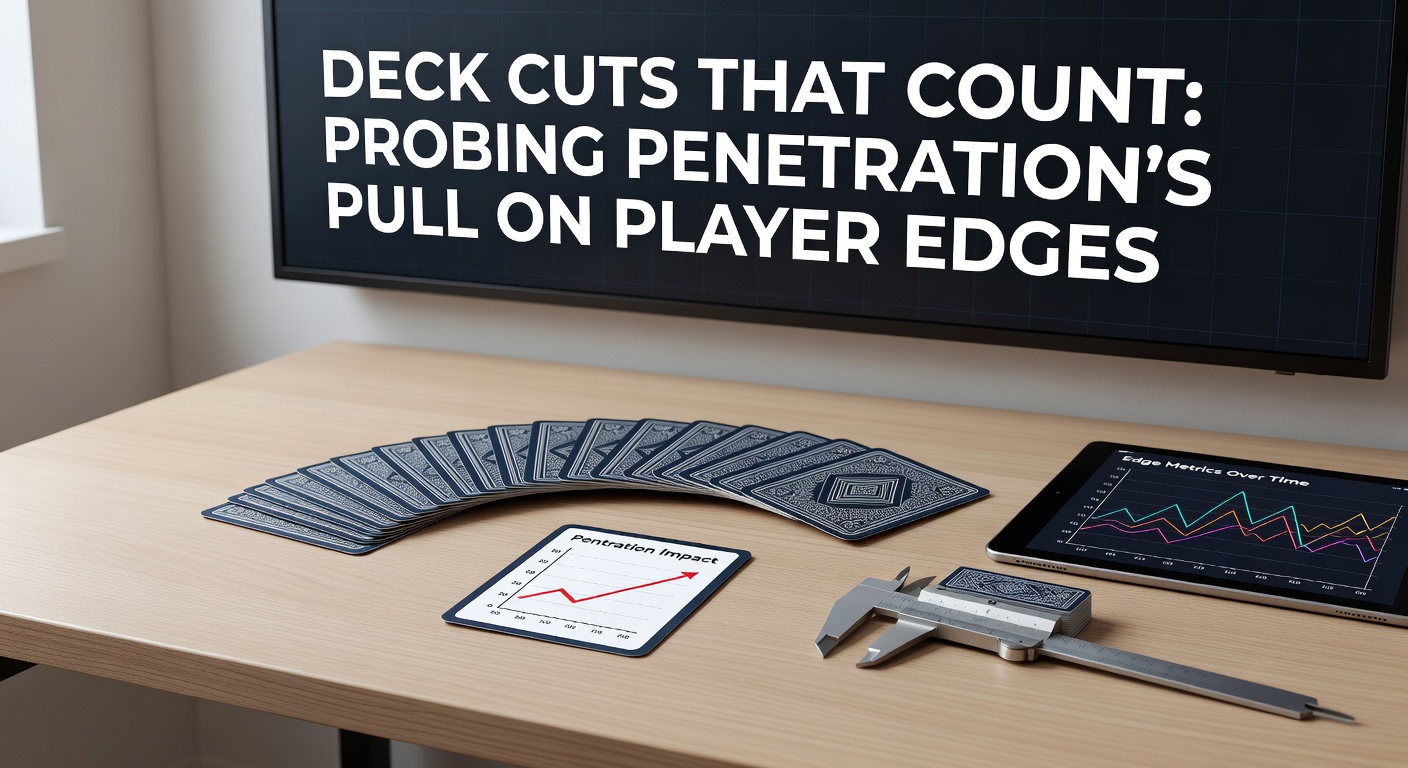
Deck penetration refers to the percentage of cards dealt from a shoe before the dealer halts play and reshuffles; in multi-deck games, typically six or eight decks, casinos control this depth to manage house edges, while players, especially advantage seekers, watch it closely because deeper cuts open doors to exploitable opportunities. Researchers who simulate millions of hands note that penetration directly influences variance and expected outcomes, with shallow cuts favoring the house and deeper ones tilting math toward skilled counters. Take standard six-deck shoes: a dealer who penetrates to 75% deals three-quarters of the cards, but drops to 50% and suddenly the game's dynamics shift dramatically.
What's interesting here involves how casinos enforce these cuts; cut cards, those plastic markers inserted deep in the shoe, signal the reshuffle point, and observers in Las Vegas floors during April 2026 report tighter controls amid rising advantage play scrutiny, yet some Strip properties still offer 65-75% in low-minimum games. Data from simulation tools reveals that even small changes, say from 65% to 75%, can swing player edges by basis points, enough to turn breakeven plays profitable over volume.
Basic Strategy Players Feel the Pinch from Shallow Penetration
For those sticking to basic strategy charts, penetration's pull manifests subtly through increased variance and slightly higher house edges; studies indicate house advantages creep up 0.1-0.3% in shallow shoes because frequent reshuffles disrupt natural card distribution patterns, although the core math of hits, stands, doubles, and splits remains largely unchanged. Experts who've run extensive sims, like those detailed on the Wizard of Odds site, show that at 50% penetration in six-deck H17 games, the house edge hovers around 0.5%, but pushes toward 0.4% as depth hits 80%, a nuance basic players overlook until bankrolls reveal the truth.
And yet, the reality is that most recreational players ignore this, focusing instead on table rules like DAS or late surrender; turns out, combining deep penetration with player-friendly rules amplifies edge reductions, making games at 75%+ cuts prime for steady grinding. One case from Atlantic City tables illustrates this: players logging sessions in spring 2026 found their hourly losses halved simply by migrating to deeper-penetrating pits, all while adhering to the same strategy.
Card Counters Ride the Wave of Deeper Deck Access
Now here's where it gets interesting for advantage players using systems like Hi-Lo: penetration becomes the make-or-break factor, as true counts only gain potency when high cards cluster late in the shoe; simulations confirm that at 25% penetration, even perfect counting yields near-zero or negative edges because reshuffles wipe out running counts before they peak, whereas 75%+ depths allow bets ramped 10-15x to capture 1-2% player advantages. Data from Nevada Gaming Control Board reports on casino surveillance indirectly underscores this, noting increased monitoring of bet spreads in deep-penetration environments.
Researchers dissecting multi-deck scenarios find that in eight-deck games, penetration must exceed 60% for Hi-Lo practitioners to post positive expectations; drop below that, and the house locks in 0.5%+ edges regardless of count accuracy. People who've back-tested systems often discover the writing's on the wall early: wong out of shallow games, hunt the deep ones, because that's where the rubber meets the road for sustainable edges. Case in point, a Vancouver-area casino study from early 2026 highlighted how 70% penetration correlated with higher rated play volumes, drawing pros who spread bets conservatively yet profitably.
Simulations and Data Paint the Full Picture
Turning to hard numbers, blackjack software like CVCX or Casino Vérité crunches billions of rounds to quantify penetration's pull; figures reveal a six-deck game with 75% penetration and 1-12 Hi-Lo spreads delivers 0.75% player edge, but slashes to 0.15% at 50%, while eight-deck equivalents demand even deeper cuts, around 80%, for similar gains. And although rules variations like S17 versus H17 interact here, the dominant lever remains depth; experts observe that Aussie no-hole-card rules compound shallow-cut disadvantages, pushing edges over 1% in low-penetration setups.
But here's the thing with team play: deeper penetration amplifies big-player impacts, as signals and ramps thrive in extended rounds; one study from a European gaming lab noted 1.2% edges achievable in 6:5 single-deck at full penetration, yet multi-deck crews still net 0.5-1% by scouting 65%+ shoes. Observers tracking April 2026 trends across Reno and Mississippi Riverboats report casinos experimenting with dynamic cuts, deepening them mid-week to fill seats, only to tighten on weekends when heat builds.
Casino Countermeasures and Player Adaptations
Casinos fight back with shallower cuts, continuous shufflers, and Wonging bans, yet data shows resilient players adapt by table-hopping or hitting off-peak hours; in fact, properties offering 80%+ in low-stakes 6-deck persist in places like Northern California card rooms, where local regs limit aggressive surveillance. Those who've studied floor dynamics know that dealer efficiency plays in too: sloppy cuts or hesitant reshuffles inadvertently boost penetration, handing edges to watchful counters.
So while tech like mind-reading shufflers looms, traditional shoes dominate, and sim data underscores why pros prioritize penetration scouting apps or insider tips; turns out, a 10% depth gain equals hours of edge grinding. Take Ontario casinos in 2026: reports indicate selective deepening in blackjack pits to counter sports betting drains, creating fleeting opportunities for those in the know.
- Six-deck at 50% penetration: House edge ~0.5% for counters
- Six-deck at 75%: Player edge ~0.75% with spreads
- Eight-deck at 65%: Breakeven territory
- Full penetration single-deck: Up to 2% swings possible
Rule Interactions Amplify Penetration Effects
Penetration doesn't operate in isolation; pair it with resplit aces or no-peek rules, and edges compound, as sims from university gaming programs demonstrate 0.2-0.4% additional player advantage in deep shoes. Yet shallow cuts negate these, turning favorable rules moot; experts who've modeled H17 versus S17 find deeper penetration mitigates the 0.2% H17 penalty far better than rule tweaks alone.
What's significant is how this plays out in live dealer online games, where virtual shoes often mimic 75% cuts to attract grinders; April 2026 data from EU platforms shows rising traffic to deep-penetration variants, blending retail math with digital convenience.
Wrapping Up the Deck Depth Debate
In the end, penetration emerges as blackjack's silent game-changer, dictating edges for basics players through variance control and unlocking true advantages for counters via count realization; sims and floor observations alike confirm that deeper cuts, those 70%+ in multi-deck, deliver the measurable pull, while casinos balance customer draw against risk. Players who scout wisely, adapt spreads accordingly, and log results thrive; the math holds firm across jurisdictions, from Vegas to Vancouver, reminding everyone that in blackjack, depth truly counts.