Multi-Hand Blackjack Rule Nuances and Probability Shifts on Digital Platforms
Jonas Lorenz · Jun 15, 2026

Multi-Hand Blackjack Rule Nuances and Probability Shifts on Digital Platforms
Multi-hand blackjack variants introduce layered rule adjustments that alter how probabilities distribute across simultaneous hands dealt from shared or segmented decks in online environments. Players often engage two or three hands at once on digital tables, and these setups create interdependencies that single-hand formats do not produce. Subtle differences in splitting limits, doubling restrictions, and deck penetration rules shift expected values because each hand draws from the same remaining card pool, which generates correlated outcomes rather than independent ones.
Digital platforms implement these variants through random number generators calibrated to specific rule sets, and the resulting probability flows reflect both the chosen parameters and the number of concurrent hands. Research from the University of Nevada's International Gaming Institute shows that adding a second hand typically reduces overall player edge by 0.2 to 0.5 percent when standard rules remain constant, yet certain rule tweaks can reverse portions of that shift. Observers note that platforms adjust payout structures and side bet availability to maintain house margins while presenting these multi-hand options to users.
Deck Composition and Hand Correlation Effects
Rule nuances around deck usage reshape probability calculations in measurable ways. Some variants require all hands to draw from one continuous deck sequence, whereas others assign separate shoe segments to each position. When a single deck serves multiple hands, removal of high or low cards on the first hand directly modifies remaining composition for subsequent decisions, and this creates measurable covariance between hand results. Studies from the Gambling Research Exchange Ontario indicate that such covariance increases variance in session outcomes by up to 18 percent compared with isolated single-hand play.
Multi-hand formats also modify basic strategy tables because optimal decisions incorporate information from prior hands within the same round. For example, a player facing a dealer ten on the first hand may adjust splitting strategy on the second hand when the initial draw removes an ace from the deck. These adjustments propagate through probability models and produce different long-term return figures than those calculated for independent hands.
Resplitting and Doubling Restrictions Across Hands
Variations in resplitting allowances further modify probability flows. Certain digital tables permit unlimited resplits on paired cards across all active hands, while others cap resplits at one or two per round. Data from the Nevada Gaming Control Board annual reports reveal that unlimited resplit rules improve player return by approximately 0.4 percent in two-hand formats, yet the benefit diminishes as hand count rises because deck exhaustion accelerates. Doubling restrictions tied to specific hand counts introduce additional layers, since some platforms prohibit doubling on the third hand when the first two have already consumed favorable cards.
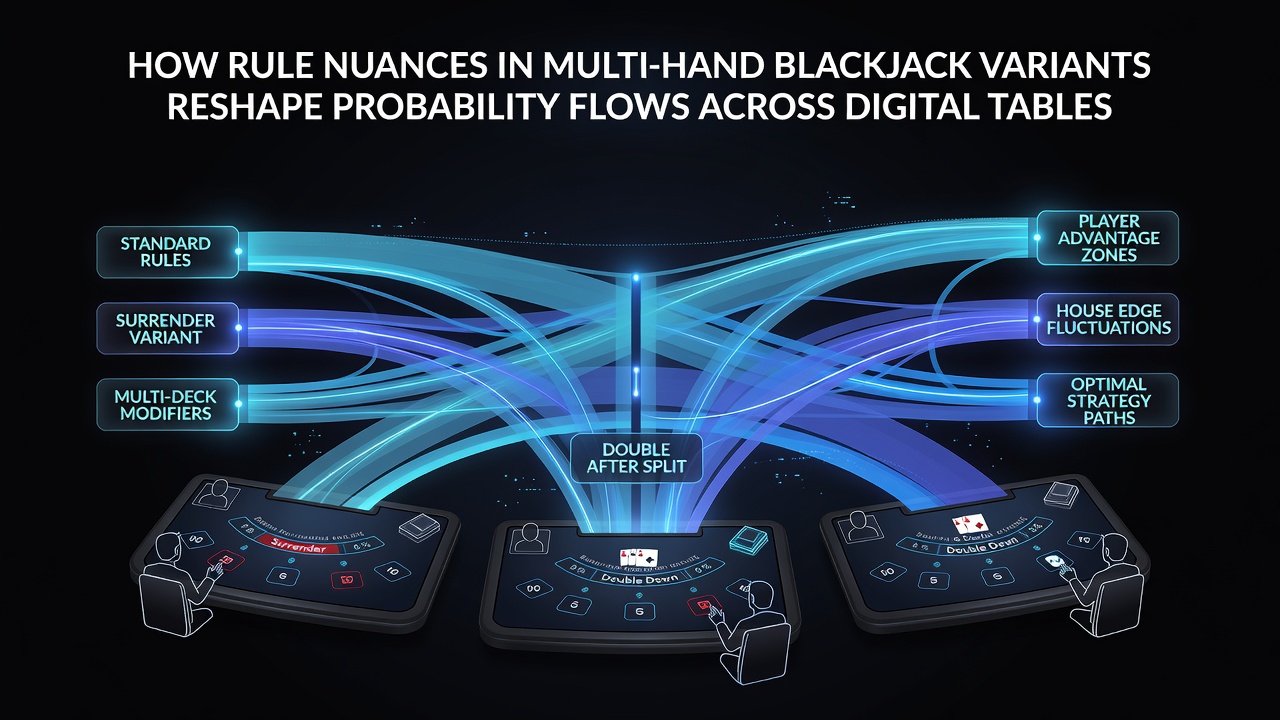
Those who model these scenarios find that the interaction between resplit limits and doubling rules creates non-linear effects on expected value. A rule set allowing double after split on the first two hands but not the third produces different optimal play matrices than uniform rules across all positions. Industry reports compiled by the European Gaming and Betting Association document how software providers recalibrate these parameters quarterly to align with regulatory requirements that took effect in multiple jurisdictions during June 2026.
Dealer Rules and Surrender Options in Multi-Hand Contexts
Dealer standing or hitting on soft seventeen interacts with multi-hand play through altered bust probabilities that affect every concurrent position. When the dealer hits soft seventeen, the increased chance of dealer improvement changes the value of early surrender decisions on later hands. Platforms that embed surrender after the first hand resolves introduce timing dependencies absent from single-hand tables, and these dependencies shift overall return percentages in ways that require updated strategy charts.
Digital implementations often display running counts or remaining deck percentages to assist decision making, yet the displayed metrics must account for cards already removed across all active hands. Failure to update these displays in real time produces discrepancies between apparent and actual probabilities, which regulatory testing in several regions now requires operators to verify through independent audits.
Platform Implementation and Regulatory Adjustments
Online operators integrate these rule nuances through configurable game engines that allow rapid deployment of variant-specific parameters. Updates implemented across multiple markets in June 2026 standardized disclosure requirements for multi-hand probability tables, requiring operators to publish adjusted return-to-player figures that reflect simultaneous hand correlations. Academic analyses published through the Gambling Research Exchange Ontario confirm that transparent publication of these adjusted figures reduces player miscalculation of session variance.
Software certification processes now include stress testing of multi-hand scenarios to ensure random number generators maintain statistical integrity when cards distribute across several positions. These tests measure deviation from theoretical probabilities under high-volume play, and operators must demonstrate compliance before releasing new variants.
Conclusion
Rule nuances in multi-hand blackjack variants produce measurable changes to probability distributions because shared deck mechanics create dependencies between concurrent hands. Digital platforms accommodate these changes through updated strategy guidance and regulatory disclosures, while research organizations continue to track how adjustments in resplitting, doubling, and dealer behavior alter long-term outcomes. The interplay between these elements remains central to understanding how multi-hand formats function across current online environments.