Loyalty Credit Mechanics in Digital Card Game Variants: An In-Depth Analysis
David Schmid · Aug 5, 2026
Loyalty Credit Mechanics in Digital Card Game Variants: An In-Depth Analysis
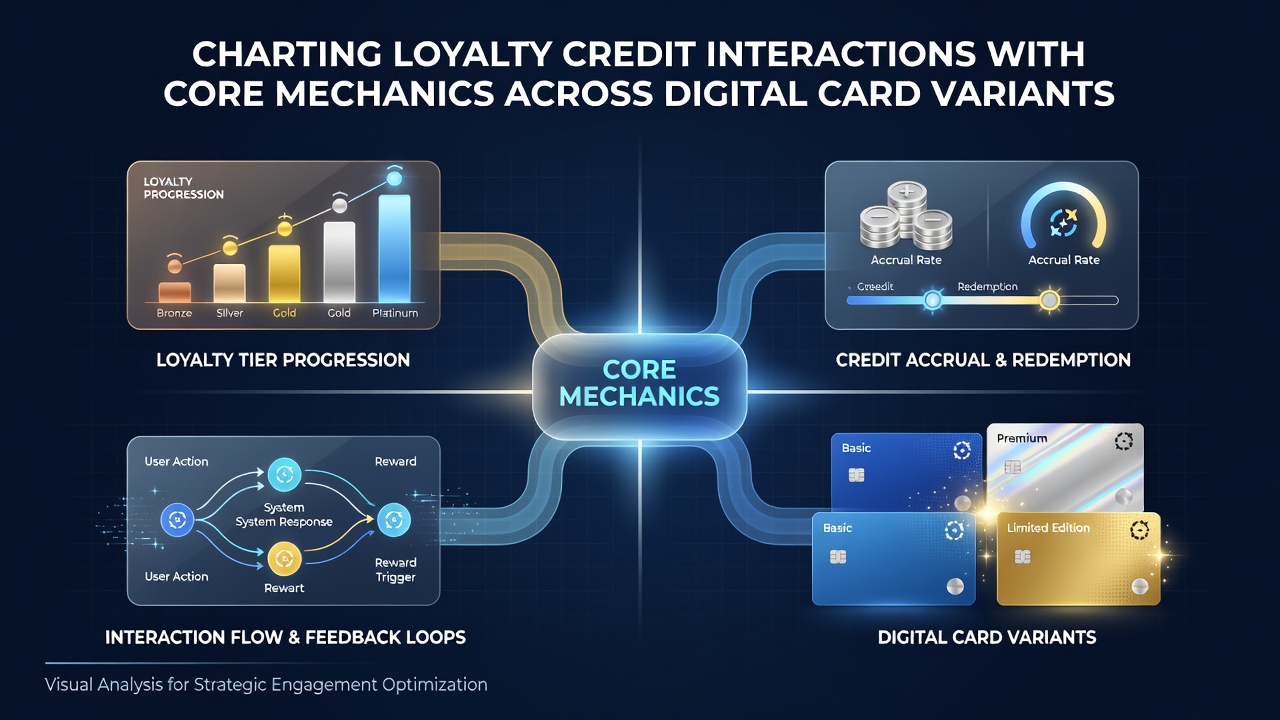
Digital card games operate through layered systems where loyalty credits accumulate based on player activity and feed directly into core loops such as deck construction, card acquisition, and match progression. These interactions vary across formats including collectible card games with rotating sets, arena-style drafting modes, and persistent collection builders, with data from 2025 industry reports showing credit redemption rates influencing retention metrics by 18 to 27 percent depending on the title.
Core mechanics typically include resource generation, card draw probabilities, and win condition assembly, while loyalty credits function as a parallel economy that modulates access to these elements through daily login bonuses, achievement multipliers, and seasonal tracks. Observers note that when credits convert into packs or wildcards at fixed ratios, players experience accelerated collection growth in games that feature large card pools exceeding 1,000 unique entries.
Structural Differences Across Game Formats
Formats that emphasize constructed play reward loyalty credits for ranked wins and milestone completions, whereas draft-centric variants tie credit payouts to pack openings and win streaks within limited pools. Research indicates that titles with shorter match durations convert credits into entry tickets more frequently, creating tighter feedback loops between session length and progression speed. In contrast, longer campaign modes spread credit distribution across narrative checkpoints, which stretches the time between meaningful mechanical upgrades.
August 2026 updates across multiple platforms introduced dynamic credit multipliers that scale with player level brackets, a change that altered interaction patterns in both high-volume and low-volume formats. Industry data reveals these multipliers increased credit velocity in mid-tier brackets while capping extreme accumulation in top percentiles to maintain equilibrium across player bases.
Credit Conversion Pathways and Mechanical Impact
Conversion pathways operate through several distinct routes: direct pack purchases, wildcard crafting, entry fee coverage, and cosmetic unlocks that indirectly support engagement. Each route intersects with core mechanics differently, since pack openings affect probability distributions for rare cards, while entry fee coverage reduces barriers to competitive modes where win rates determine further credit gains. Studies from research institutions in North America and Europe document that players who prioritize crafting routes achieve stable deck viability 12 percent faster than those focused solely on pack openings.
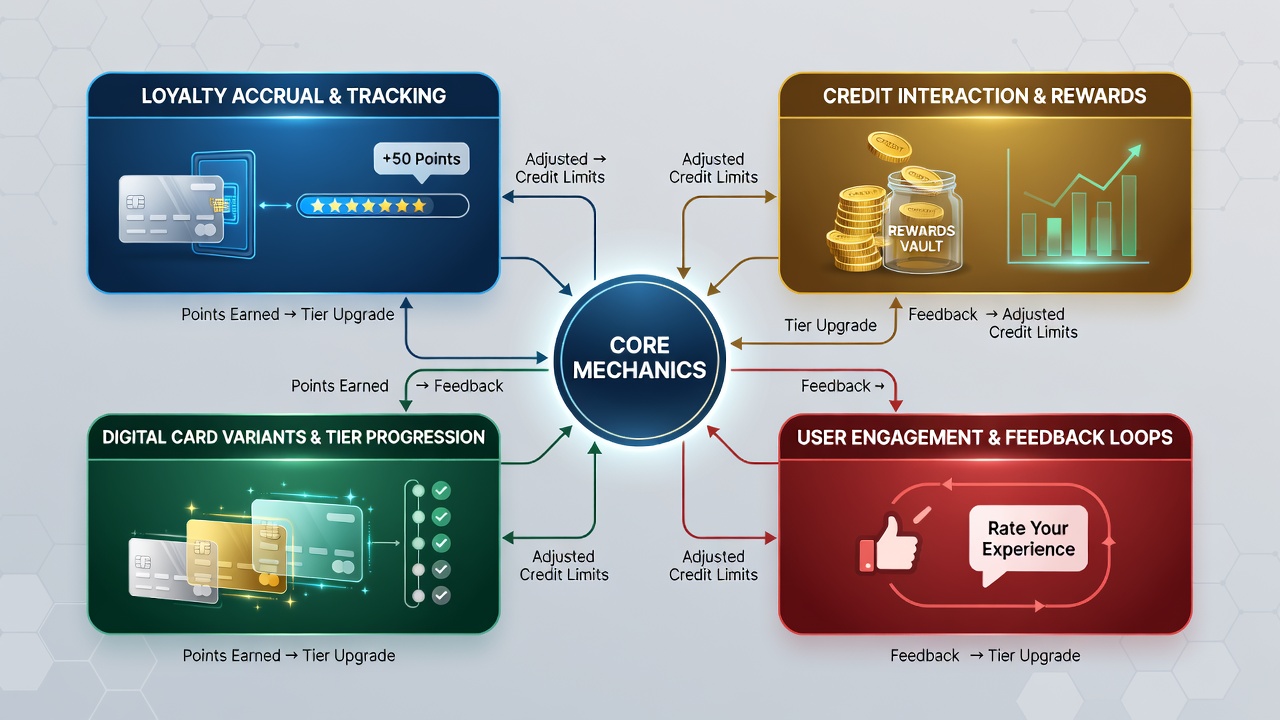
Mechanics such as pity timers and duplicate protection further modulate these interactions by guaranteeing minimum value from credit expenditures. When duplicate protection activates after a set number of duplicates, the effective value of loyalty credits rises because wasted acquisitions decrease. According to reports issued by the Entertainment Software Association, platforms that implemented enhanced pity systems in early 2026 recorded measurable upticks in credit engagement without corresponding increases in overall spending.
Regional Regulatory Influences on Credit Design
Regulatory frameworks in different jurisdictions shape how credits interact with monetization mechanics, with bodies such as the Australian Classification Board and Canadian provincial oversight committees requiring clear disclosure of credit-to-reward ratios. These requirements have led developers to standardize display elements that show expected credit yields per activity type, allowing players to map progression more precisely. Data compiled across multiple regions shows transparent labeling correlates with higher sustained engagement in titles that maintain large active user bases.
Academic analyses from university research groups have examined how credit caps and decay mechanics prevent runaway accumulation that could unbalance competitive integrity. When credits expire after fixed periods, players adjust activity patterns to front-load high-value actions, which in turn concentrates mechanical advantages during specific windows of each season cycle.
Conclusion
Loyalty credit systems continue to evolve in tandem with core card mechanics, producing measurable effects on collection speed, match access, and format viability across digital variants. Figures from 2026 demonstrate that careful calibration of conversion rates and multiplier structures supports balanced ecosystems while accommodating diverse player engagement styles. Continued monitoring of these interactions remains essential as new variants and regulatory adjustments emerge in subsequent periods.