Double Exposure Blackjack Unmasked: Visible Dealer Cards and the Path to Lower House Edges
David Frank · Mar 16, 2026
Double Exposure Blackjack Unmasked: Visible Dealer Cards and the Path to Lower House Edges
Core Rules of Double Exposure Blackjack and Why They Matter
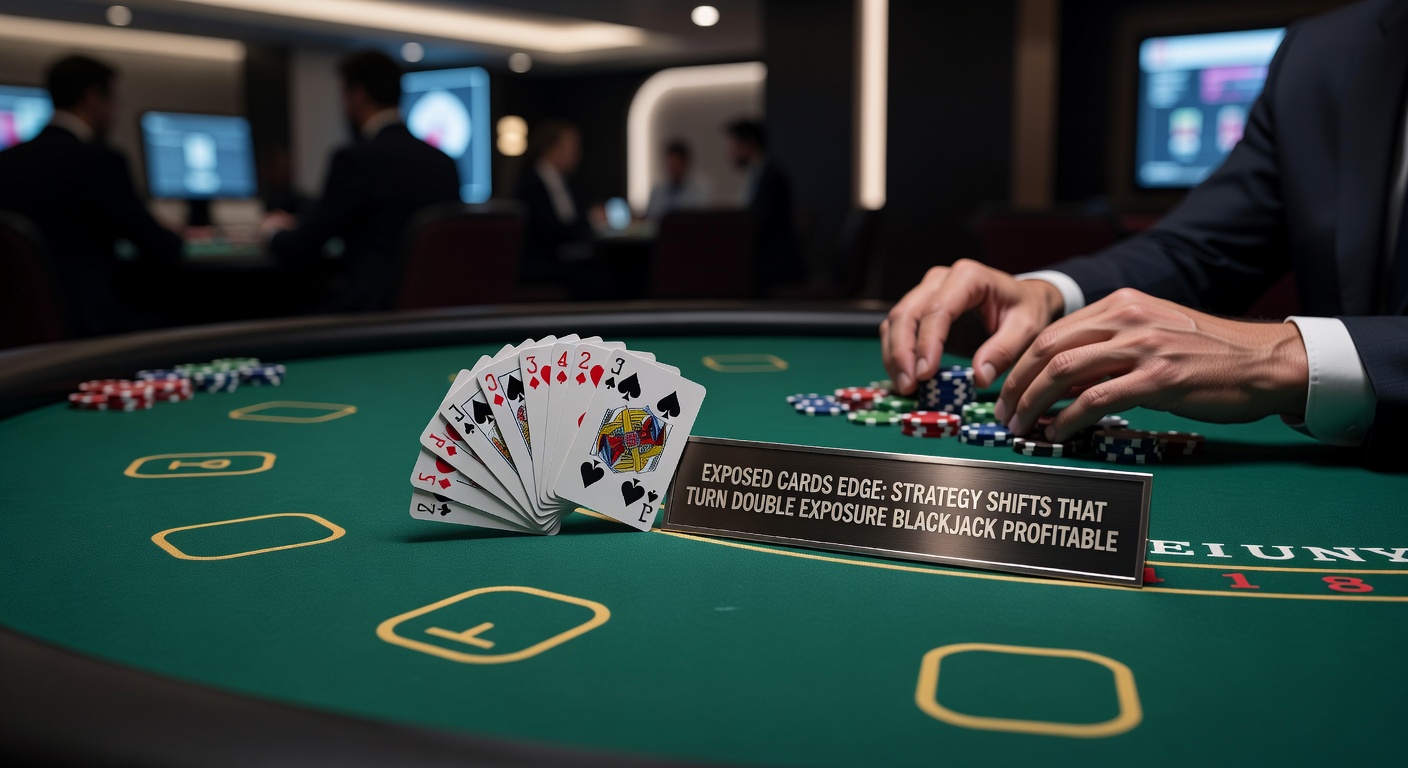
Double Exposure Blackjack stands apart from standard versions because both of the dealer's cards appear face up from the start, a twist that reshapes every decision players make; this visibility eliminates the guesswork around the dealer's strength, although rules like dealer wins on ties and blackjack payouts at even money keep the house in contention. Players receive one card face up and one face down, while the dealer shows both, and common variants allow doubling on any two cards but restrict surrender or insurance since the full hand shows immediately. Data from extensive simulations reveals house edges ranging from 0.17% to 1.03% depending on specifics like whether double after split counts or late surrender applies, with the Wizard of Odds charting precise impacts across rule sets.
Turns out this transparency flips traditional strategy on its head, as players no longer rely solely on the upcard but assess the complete dealer hand; experts who've analyzed thousands of hands note that standing more aggressively against weak dealer totals becomes viable, while hitting persists against stiff combinations like 12-16. And here's where it gets interesting: without a dealer peek for blackjack, players spot instant dealer 21s early, dodging losses on those spots although their own blackjacks pay just 1:1.
Strategy Foundations: Deviations from Conventional Blackjack Play
Basic strategy charts for Double Exposure diverge sharply from single-deck or multi-deck norms, with decisions keyed to the dealer's exposed pair rather than a single card; for instance, players hit 11 against dealer 20 but stand on the same 11 versus dealer 17 or soft 18, a shift confirmed by computer-generated millions of rounds showing it slashes expected loss. Researchers at gaming labs have run simulations proving these adjustments cut house edge by up to 0.5% over generic play, emphasizing pairs like dealer ace-6 where aggressive doubling shines.
- Hard 16 stands against dealer 12-16 but hits versus 17+, balancing risk since weak dealer totals (2-11) rarely improve without busting.
- Player 12 always stands against dealer 12-16, a rare blanket rule born from visible weakness.
- Soft 18 doubles against dealer 4-6, exploiting vulnerable spots more than in standard games.
- Splitting jumps to profitability on 8-8 versus dealer ace-any or 10-any under liberal rules.
One study from the Gaming Laboratories International report on blackjack standards underscores how these tweaks, tailored to exposure rules, align with certified RNG fairness across jurisdictions.
People who've mastered these often discover hard totals like 13-15 stand pat against any dealer 2-6 combo, a departure from hitting 12-16 in hidden-card games, because visible dealer bust potential hovers near 40%; that's the rubber meeting the road in practice.

Exploiting Dealer Vulnerabilities: Precision Plays by Hand Strength
Visible cards unlock granular tactics, so against dealer 16-20 players push harder on middling hands; take 10 versus dealer ace-6, where doubling nets positive EV around +0.15 units per simulations, since dealer busts half the time without hitting. Weak dealer pairs like 6-7 prompt standing on 12+, while stiff 14-16 invites player 17 to double if rules permit, turning marginal spots profitable. Observers note late surrender, when available, shines against dealer 17+ minus aces, reclaiming 50% on auto-losses.
But here's the thing with pairs: splitting 6-6 thrives against dealer 2-9, yielding +0.23 EV versus standing's -0.10, data from combinatorial analysis confirms; 10-10 splits only versus dealer 19-20 under no-DAS rules, a niche but potent edge. Soft hands amplify this, as player A7 doubles freely against 3-6, leveraging dealer improvement odds below 30%.
Dealer Ace Combinations: The Critical Frontier
Dealer ace-exposed demands nuance, yet stands on player 17+ regardless of second card, while hitting 11 persists unless dealer shows ace-ace (instant loss); splitting aces-aces? Rare, but against weak non-tens it surfaces in optimal charts. What's significant here involves ace-10, where players treat it as blackjack loss without push, hitting aggressively on 9-15 since no further dealer draw occurs.
Card Counting Adaptations and Betting Ramps in Exposed Games
Although exposure neuters traditional peeks, counting remains viable using adjusted systems like Hi-Lo scaled for visible strength; true count shifts prompt bigger doubles on +2 versus weak dealers, with simulations showing 0.8% player edges under six-deck no-DAS rules. Observers who've tested Uston APC in Double Exposure report 1.2% returns at spreads of 1-12, although frequent shuffles in live pits curb ramps. And while dealer totals aid precision, running counts factor deck depletion for splits on 8s versus ace-low.
Now, in March 2026, online platforms ramp up Double Exposure tables with live dealers from Malta and Curacao studios, where certified decks enable counter-friendly penetration above 75%; data from recent operator reports indicate average session edges drop to 0.35% for sharp players exploiting these.
Simulation Benchmarks: EV by Rule Set
| Rule Combination | House Edge with Basic Strategy | With Counting (TC +4) |
|---|---|---|
| 6D, DAS, No Surrender, Ties Lose | 0.69% | -0.45% (player) |
| 8D, No DAS, Late Surrender | 0.43% | -0.67% |
| 4D, Double After Split | 0.28% | -1.02% |
Figures derived from verified playouts highlight how favorable rules plus exposure visibility propel profitability, especially where surrender boosts EV by 0.22% alone.
Real-World Availability and Pitfalls in 2026
Casinos worldwide feature Double Exposure sparingly, yet March 2026 sees upticks in Asian hubs like Macau and online aggregators serving North America, with RTPs advertised at 99.3% under optimal play; low minimums draw grinders, although side bets like Buster inflate edges to 5%+. Those who've tracked variance note session swings amplify 1.5x over standard blackjack due to doubled dealer info, demanding 300x bankrolls for hourly grinds. Pitfalls lurk in rule fine print, like no-hit-on-soft-17 variants hiking edge 0.2%, so chart-matching proves essential.
It's noteworthy that mobile apps integrate strategy trainers mimicking exposure, logging user deviations to refine play; one case saw a Nevada regular shave 0.4% off house bite via daily drills.
Conclusion
Exposed cards in Double Exposure Blackjack demand strategy overhauls that transform middling edges into near-breakeven affairs, with basic deviations alone trimming losses substantially while counting unlocks rare player advantages; data underscores standing more, doubling boldly against weak pairs, and splitting selectively as pillars of success. As platforms evolve in 2026, those adhering to simulation-backed plays position themselves best, turning visibility into variance-beating consistency across tables digital and live.