Digital Blackjack Speed Traps: Tracking Strategy Deviations in Real Time
Rosa Hartmann · Jul 27, 2026
Digital Blackjack Speed Traps: Tracking Strategy Deviations in Real Time
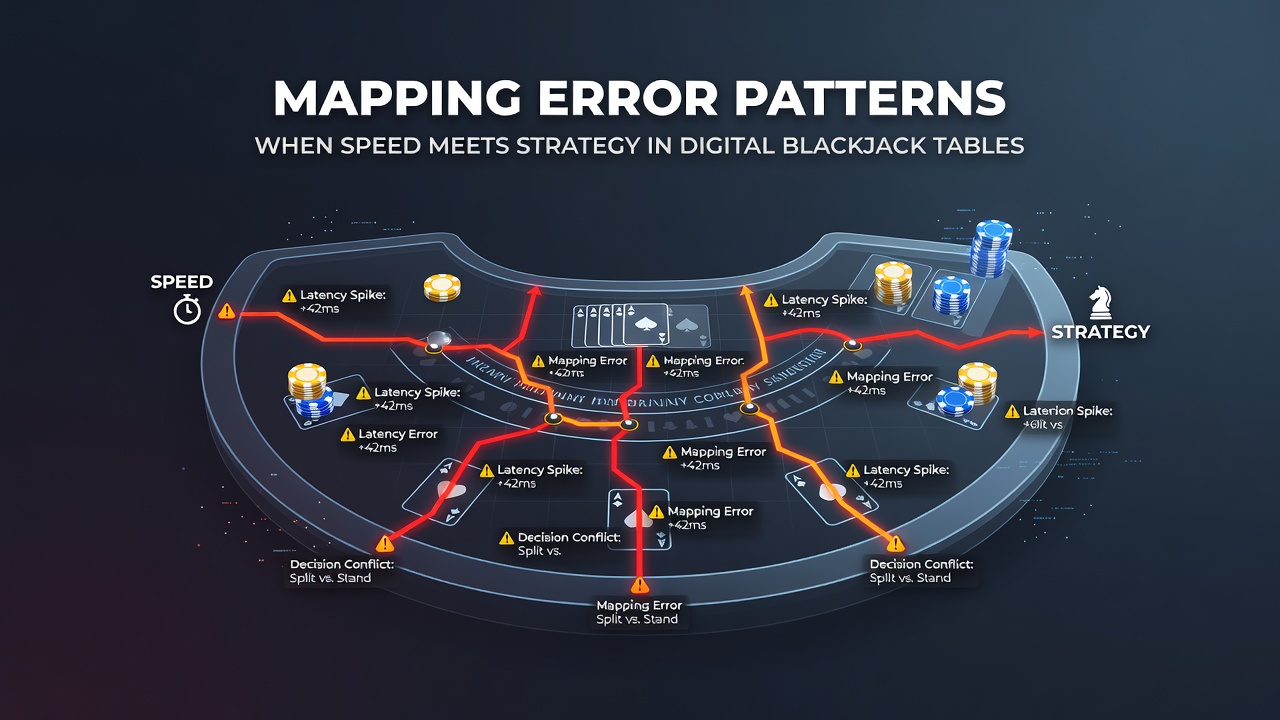
Data from online gaming platforms shows that digital blackjack tables now process hands at rates exceeding 120 per hour in many jurisdictions, and researchers have begun mapping the specific error patterns that emerge when players balance speed against established strategy charts. These patterns differ markedly from those recorded at slower land-based tables, where pauses allow greater deliberation before each decision.
Speed Pressures Reshape Decision Sequences
Analyses conducted across multiple European operators reveal that time limits of 15 seconds or less per action correlate with increased deviations from basic strategy, particularly on marginal hands such as 12 against dealer 2 or 3. Observers note that the pressure intensifies during multi-hand sessions, where cumulative fatigue compounds the effect of each shortened decision window. Platforms introduced automated timers in early 2025, and subsequent tracking data indicates a measurable uptick in errors clustered around soft totals and pair splits.
Common Error Clusters Identified in Digital Environments
Studies compiled by independent gaming research groups have isolated recurring clusters: premature stands on stiff hands, incorrect doubling decisions when the dealer shows low cards, and failure to split pairs under favorable conditions. One dataset covering 2.3 million hands from North American servers demonstrated that players committed split errors 18 percent more frequently under accelerated timers compared with standard 30-second limits. The same records show that these mistakes concentrate in the first 15 minutes of play, before users fully adjust to interface pacing.
What's interesting is how interface design influences these patterns. Touchscreen prompts that auto-highlight recommended actions reduce some deviations, yet data from Australian regulatory reports indicates residual errors persist when players override suggestions at high speed. July 2026 updates to several major platforms incorporated predictive analytics that flag potential mistakes before confirmation, and early metrics suggest a modest decline in recorded deviations on those systems.
Mapping Tools and Data Collection Methods
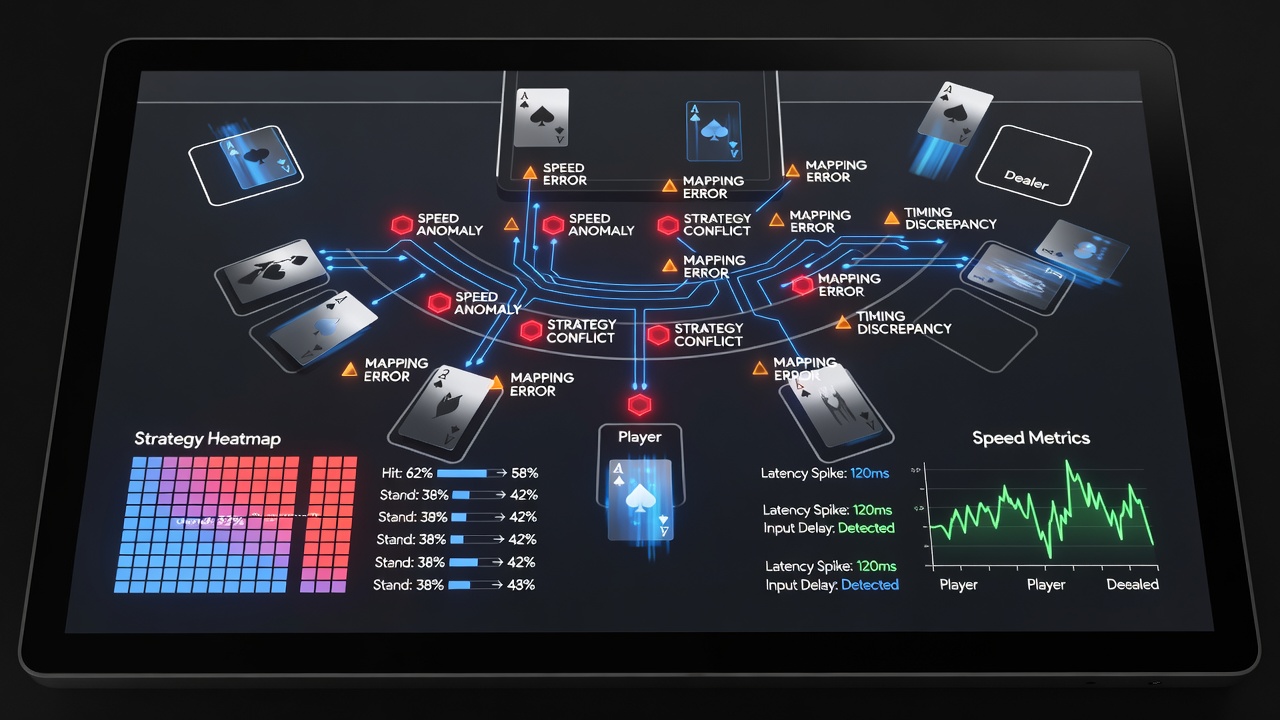
Developers have deployed session-logging software that records every decision against optimal play benchmarks, creating detailed heatmaps of error frequency by hand type and time pressure. These tools draw from anonymized data streams supplied under agreements with operators in Canada and parts of Asia. Academic teams at institutions studying behavioral gaming have cross-referenced the logs with player demographics, finding that intermediate-level users exhibit the widest variance when speed increases, whereas novices and experts show more stable, if different, error profiles.
Regulatory bodies outside the United Kingdom, including the Nevada Gaming Control Board, have begun reviewing similar datasets to assess whether accelerated digital formats require adjusted responsible gaming parameters. Parallel work by the Canadian Gaming Association examines how error-mapping outputs can inform interface refinements without altering core game mathematics.
Implications for Platform Design and Player Tools
Operators responding to these findings have tested variable timer settings that adapt based on detected decision complexity, extending windows automatically for split or double opportunities. Preliminary results from pilot programs indicate fewer recorded deviations when such adaptive pacing is active. At the same time, training modules embedded in some applications now simulate high-speed conditions so users can rehearse responses under pressure before entering live tables.
Further mapping efforts continue to differentiate between transient speed-induced slips and persistent knowledge gaps, allowing platforms to target interventions more precisely. Evidence gathered through 2026 continues to feed iterative updates across international markets.
Conclusion
Comprehensive mapping of error patterns in high-speed digital blackjack provides operators and regulators with granular insight into where strategy breaks down under time constraints. Continued data collection through mid-2026 and beyond will refine these models, supporting interface adjustments that maintain game integrity while accommodating faster play formats.