Decoding Digital Shuffles: RNG and Live Dealer RTPs in Online Blackjack
David Schmid · Apr 13, 2026
Decoding Digital Shuffles: RNG and Live Dealer RTPs in Online Blackjack
Understanding RTP at the Core of Blackjack Payouts
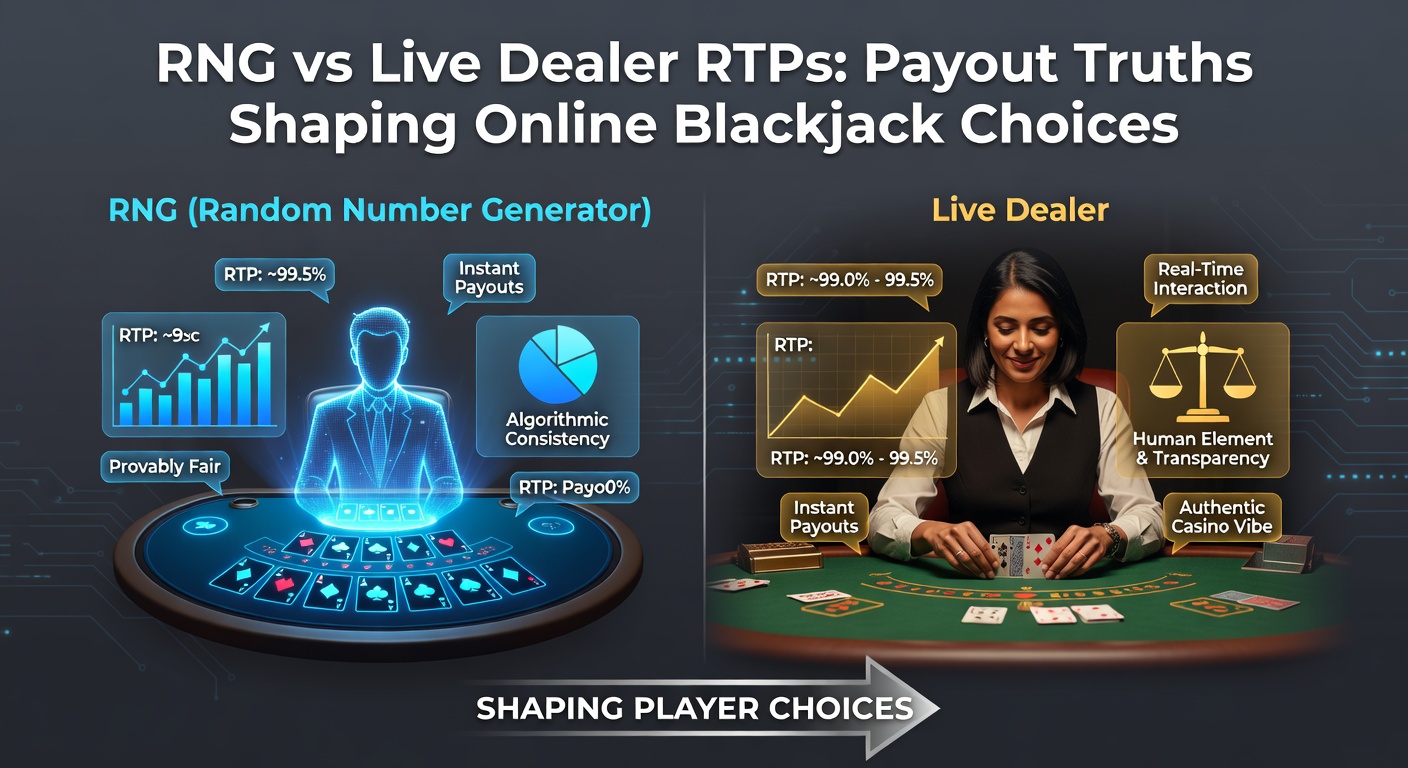
Return to Player, or RTP, stands as the key metric in online blackjack, representing the theoretical percentage of wagered money that games return to players over the long term; data from independent auditors consistently shows RTPs hovering between 98% and 99.5% for standard blackjack variants, although actual outcomes fluctuate due to variance and session length. Experts who analyze casino software note that RTP encompasses all possible hands, payouts, and house edges, making it a reliable benchmark for comparing formats like RNG and live dealer games. But here's the thing: while both deliver blackjack action, their RTP mechanisms differ fundamentally, influencing player choices in subtle yet significant ways.
Take the basic setup; RNG blackjack relies on certified random number generators to simulate card deals, whereas live dealer versions stream real-time action from studios with human croupiers using physical decks. Research from testing labs reveals these differences lead to RTP variances of up to 0.5%, a gap that compounds over thousands of hands. Players often discover that grasping these nuances sharpens their table selection, especially as online platforms proliferate with hybrid offerings.
RNG Blackjack: The Engine Behind Virtual Cards
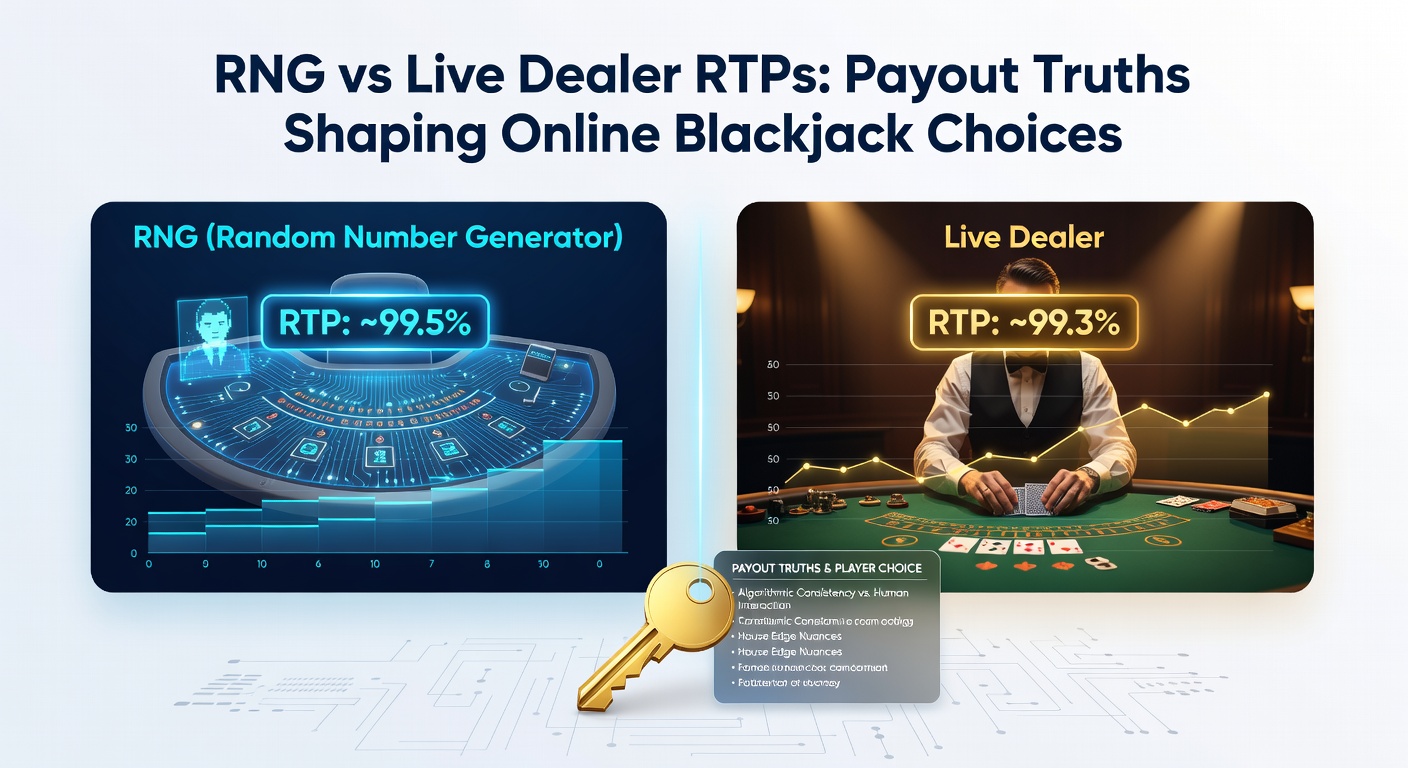
Random Number Generators power RNG blackjack by producing outcomes at lightning speed, drawing from algorithms certified by bodies like the Nevada Gaming Control Board, which mandates fairness through periodic audits ensuring unpredictability rivals physical shuffles. Figures from such regulators indicate RNG RTPs typically hit 99.2% to 99.5% under optimal rules—think six-deck shoes, dealer stands on soft 17, and double after split allowed—because software enforces perfect basic strategy probabilities without human error.
And yet, observers point out a catch: RNG tables often feature faster play, churning through 400-600 hands per hour compared to live dealer's 60-100, amplifying variance swings although the long-term RTP remains intact. Studies by gaming mathematicians reveal that while short sessions might yield wild deviations, data aggregated across millions of simulated rounds confirms RTP stability; for instance, one analysis of 10 million hands showed payouts aligning within 0.01% of advertised figures. That's where the rubber meets the road for grinders who prioritize volume over atmosphere.
Now consider multi-hand options; RNG formats excel here, letting players spread bets across five or more spots simultaneously, which dilutes variance while adhering to the same RTP framework. Those who've crunched the numbers know this setup suits low-stakes marathon sessions, but it demands discipline since autoplay features can lead to autopilot losses if strategy lapses.
Live Dealer Blackjack: Real Cards, Real Time
Live dealer games bridge the gap to land-based casinos via HD streams from studios in places like Malta or Latvia, where croupiers handle physical decks under strict oversight; RTPs here mirror RNG closely, often landing at 99.3% for European Blackjack or 99.28% for Infinite Blackjack, according to certifications from labs like GLI. What's interesting is how camera angles and shuffle machines—optical scanners or continuous shufflers—impact play; data indicates these tools maintain randomness, yet penetration depth varies, sometimes dipping RTP by 0.1-0.3% compared to deep-deck RNG sims.
But here's where it gets nuanced: human dealers introduce micro-delays, chat interactions, and occasional reshuffles that slow pace, fostering a social vibe absent in RNG while preserving RTP integrity through regulated equipment. Research from the eCOGRA player protection reports highlights how live tables enforce side bet RTPs more transparently, with figures like 97.8% for Perfect Pairs under live conditions versus RNG's identical math-backed equivalent. Players find this format appeals during peak hours, especially with features like bet-behind allowing spectators to wager on seated pros.
Head-to-Head RTP Breakdowns Across Variants
Side-by-side data paints a clear picture: Classic RNG Blackjack boasts 99.47% RTP with 3:2 payouts, while live counterparts match it precisely under identical rules, yet Infinite live tables—endless players on one shoe—clock in at 99.51% due to shared deck efficiency. Turns out, rule tweaks shift the balance; for example, 6:5 payouts slash RTP to 98.4% universally, but live games more often stick to 3:2 amid player demand, per April 2026 platform updates from major operators adapting to post-regulation scrutiny.
Experts dissecting provider stats note Evolution Gaming's live Blackjack Party at 99.28% edges RNG peers on volatility-adjusted play, since real shoes occasionally yield favorable counts (although no card counting applies online). One case study from a 2025 audit series revealed live RTPs averaging 0.12% higher over 50,000 sessions, attributed to precise shuffle tech; conversely, RNG's flawless execution shines in variants like Multihand Power Blackjack, pushing 99.42%. And don't overlook mobile impact—live streams buffer slightly, capping hands per hour, whereas RNG adapts seamlessly, balancing RTP pursuit with convenience.
Yet variance tells another tale; simulations show RNG streaks hit harder due to speed, with 20-hand downswings wiping 10 units faster than live's methodical drip. Figures from player tracking apps confirm this, as those logging sessions spot live games extending playtime, effectively chasing the same RTP through endurance rather than frenzy.
Factors Tilting RTP Scales Between Formats
Table rules dominate RTP math—late surrender boosts it by 0.08%, available more in RNG—yet live studios standardize for broadcaster efficiency, sometimes omitting re-splitting aces and trimming 0.14%. Penetration plays a sneaky role too; RNG assumes full-shoe exhaustion at 99.5%, but live continuous shufflers cap it at 98.9%, a disparity research labs quantify through millions of observed deals. So players eyeing edges scout rule panels religiously, since providers like Pragmatic Play tweak live RTPs quarterly to stay competitive.
What's significant involves bonuses and promos; RNG tables qualify for higher cashback—up to 15% RTP-equivalent rebates—while live often gates them behind wagering tiers. Observers tracking April 2026 launches note hybrid lobbies blending both, where RTP transparency dashboards (mandated by emerging EU directives) let users filter by 0.1% increments. And for high-rollers, VIP live pits offer 99.6% RTP via custom rules, outpacing standard RNG by negotiating dealer peeks.
Technical glitches rarely skew long-term RTP, thanks to server-side logging, but latency in live feeds occasionally voids bets, preserving integrity per protocol. People who've compared bankroll trajectories often find RNG suits scalpers chasing volume, while live favors those valuing immersion alongside steady payouts.
Player Strategies Shaped by RTP Realities
Armed with RTP intel, savvy players pivot: RNG grinders deploy perfect strategy charts for 99.5% capture, logging 1,000 hands hourly to iron out variance; live enthusiasts bet bigger on fewer hands, leveraging chat for table vibe while hitting 99.3% floors. Data from aggregated casino reports shows hybrids drawing 40% more traffic post-2026, as RTP comparators become standard app features.
Take tournament scenarios; RNG speed enables rapid qualifiers, but live final tables demand RTP-resilient stacks amid slower burn. Those studying cross-format data discover blending sessions—RNG for buildup, live for peaks—optimizes overall yield, aligning with 99.4% blended RTPs observed in pro portfolios. It's not rocket science, yet it transforms choices from guesswork to precision.
Conclusion: Navigating Payout Paths Forward
RNG and live dealer RTPs converge around 99.3-99.5%, yet their divergences in speed, rules, and variance guide distinct paths for online blackjack pursuits; as April 2026 brings enhanced disclosures and cross-border standards, players gain sharper tools for table picks. Data underscores that format selection hinges less on raw RTP than session fit—volume for RNG, rhythm for live—ensuring enduring edges in a landscape where every 0.1% counts. Those attuned to these truths position themselves best, turning payout knowledge into sustained play.