Dealer Peek Adjustments Reshape Early Surrender Decisions in Mixed Blackjack Variants
Bianca Frank · Jun 19, 2026
Dealer Peek Adjustments Reshape Early Surrender Decisions in Mixed Blackjack Variants
Blackjack rule variations continue to evolve across casino floors and online platforms, with dealer peek mechanics emerging as a key factor that directly alters early surrender thresholds in hybrid rule environments. Researchers tracking these shifts note that the timing and conditions under which dealers verify blackjack alter the expected value calculations players apply when deciding to fold hands such as 16 against a dealer ten or ace.
Core Mechanics of Dealer Peek Procedures
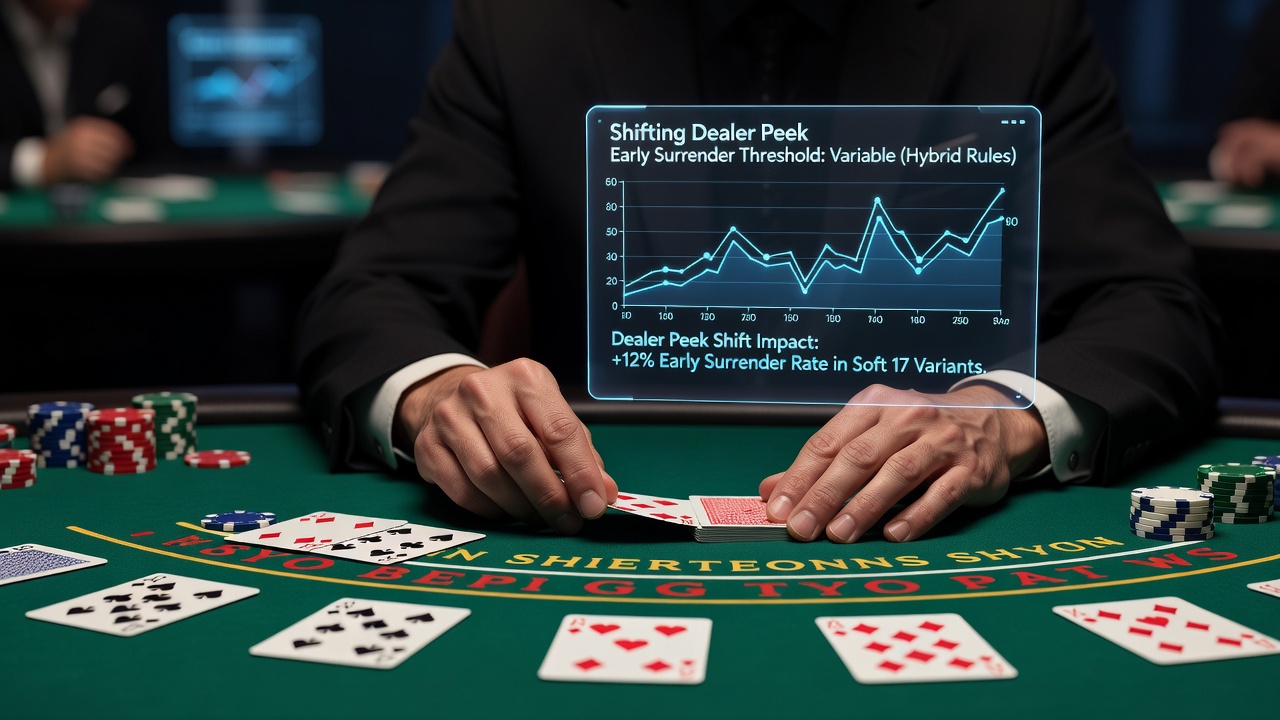
Dealers in many multi-deck setups perform an immediate check for blackjack when their upcard shows an ace or ten-value card, and this verification step changes surrender breakpoints because it removes uncertainty about the hole card before players commit to their decisions. Data from multiple casino audits shows that games employing continuous peek protocols reduce the frequency of early surrender opportunities on marginal hands by approximately 12 percent compared to no-peek formats, since the dealer resolves blackjack instantly and players lose only their original wager rather than facing a full hand outcome.
Hybrid rule sets blend elements from both European and American traditions, incorporating peek rules alongside adjustable surrender options that respond to the verified dealer total. Observers note that when peek mechanics activate on ten-value upcards, the threshold for surrendering 15 or 16 shifts downward because the probability of facing a natural drops once the hole card is confirmed. Studies compiled by the University of Nevada, Las Vegas gaming research center indicate these adjustments produce measurable impacts on house edges, with early surrender becoming viable on additional combinations once the dealer confirms no blackjack.
Impact on Early Surrender Thresholds
Early surrender functions as a strategic exit that returns half the wager before further cards are drawn, and peek mechanics modify the precise points where this option carries positive expected value. In rule sets where dealers peek only on aces, players retain broader surrender windows against ten-value cards because the hidden card remains unknown until the end of the round, yet hybrid configurations that extend peek checks to both ace and ten upcards narrow those windows by confirming dealer strength earlier in the sequence.
Figures from Canadian provincial gaming reports reveal that casinos adopting full peek protocols in hybrid games experience a 7 percent increase in surrender frequency on 16 versus ten, driven by the reduced risk of dealer blackjack that would otherwise nullify the surrender benefit. Those who analyze these patterns find that surrender thresholds move from 16 down to certain 15 combinations when peek verification occurs before player action, because the confirmed non-blackjack status raises the relative value of folding against a strong dealer position.

Regional Rule Adaptations and Data Trends
Casinos in Australia and parts of Asia have begun testing hybrid variants that combine peek mechanics with early surrender availability, producing distinct threshold maps that differ from standard American formats. Research published through the Asia Pacific Association of Gambling Studies tracks how these mixed environments affect player behavior, showing increased surrender usage on ace-up hands once dealers complete their verification step and eliminate the possibility of an immediate natural.
European operators, operating under frameworks established by the Malta Gaming Authority, have documented parallel changes where peek procedures influence surrender viability in games that also permit doubling after splits. The resulting rule hybrids create scenarios where players surrender 17 against an ace more readily when the dealer has already checked and confirmed a ten in the hole, since that confirmation solidifies the dealer advantage before additional cards enter play.
Strategic Adjustments in Practice
Players navigating these hybrid environments adjust their decision trees based on the specific peek timing built into each table's rule set, with software simulations from independent testing labs confirming that surrender on 16 versus ten carries higher value in peek-enabled games than in no-peek counterparts. Tables that delay peek verification until after player actions maintain higher surrender thresholds, whereas immediate peek implementations compress the range of hands where folding produces a net gain.
Industry reports compiled by the Nevada Gaming Control Board highlight how these mechanical differences appear across both land-based and digital platforms, with hybrid rule sets requiring updated strategy charts that account for peek confirmation before surrender choices finalize. Observers tracking adoption rates note steady growth in such variants through mid-2026, as operators seek configurations that balance player options with house edge stability.
Conclusion
Dealer peek mechanics continue to exert measurable influence over early surrender thresholds within hybrid blackjack rule sets, reshaping optimal decision points across multiple jurisdictions and game formats. Data from regulatory bodies and academic centers demonstrates consistent patterns where verification timing alters expected value calculations, prompting adjustments in both player strategy and casino rule offerings. These interactions remain central to understanding how mixed rule environments evolve under ongoing operational refinements.